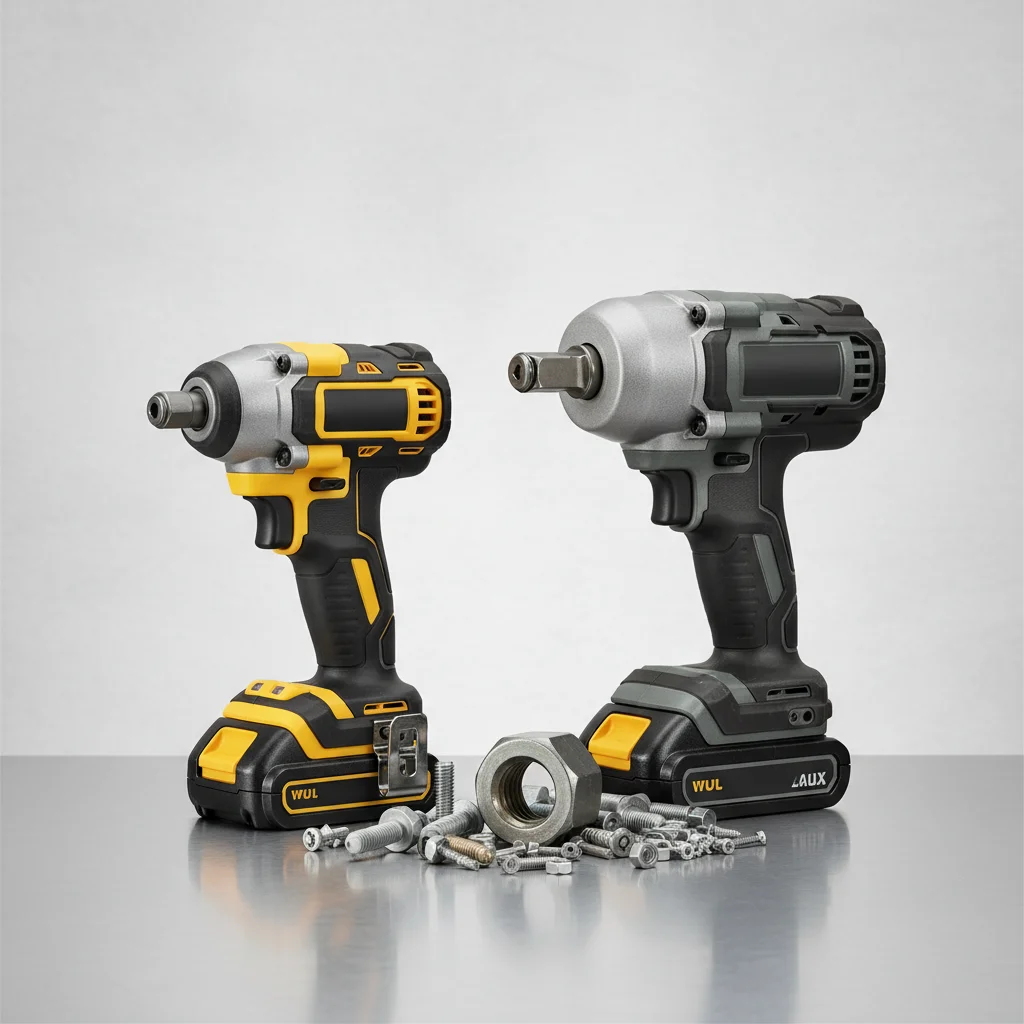
Deciding between an impact driver and an impact wrench for your heavy-duty tasks comes down to understanding their distinct applications and power outputs. While both tools deliver rotational force with percussive blows, an impact driver is generally suited for fastening screws and smaller bolts, whereas an impact wrench is designed for much larger fasteners, like lug nuts and structural bolts, requiring significantly higher torque.
Understanding the Core Differences in Torque and Application
The fundamental difference lies in their torque output and intended use. Impact drivers typically offer up to 2,000 inch-pounds of torque, making them ideal for driving long screws, lag bolts, and smaller nuts in woodworking, construction, and general DIY projects. Their compact size and hex chuck are perfect for quick bit changes and working in tighter spaces. For explore our cordless impact reviews on this site.
Impact wrenches, on the other hand, are powerhouses, often delivering hundreds, even thousands, of foot-pounds of torque. This immense power is necessary for breaking loose rusted bolts, tightening lug nuts on vehicles, and assembling heavy machinery. They feature a square drive (typically 1/2-inch or 3/4-inch) to accommodate sockets, which are essential for these high-torque applications.
Design and Ergonomics: What Fits Your Hand and Your Job?
Beyond power, the physical design and ergonomics also play a crucial role. Impact drivers are generally lighter and more compact, designed for single-hand operation and extended use without significant fatigue. Their pistol-grip design and balanced weight distribution make them comfortable for overhead work or repetitive fastening tasks.
Impact wrenches, especially the more powerful models, tend to be heavier and bulkier. While some compact impact wrenches exist, the larger units often require two hands for stable operation, particularly when dealing with stubborn fasteners. The added weight is a trade-off for the increased power and durability required for their demanding applications.
When to Choose an Impact Driver
|
Our Picks for the Best Impact Driver in 2026
As an Amazon Associate I earn from qualifying purchases.
|
||
| Num | Product | Action |
|---|---|---|
| 1 | DEWALT ATOMIC 20V MAX* Impact Driver, Cordless, Compact, 1/4-Inch, Tool Only (DCF809B) |

|
| 2 | DEWALT 20V MAX Cordless Drill and Impact Driver, Power Tool Combo Kit , Includes 2 Batteries, Charger and Bag (DCK240C2) |
|
| 3 | DEWALT 20V MAX Cordless Impact Wrench, 1/2 Impact Gun, 4-Speed High Torque with Hog Ring Anvil and LED Light, Brushless Motor, Precision Wrench, Tool Only (DCF900B) |
|
| 4 | DEWALT 20V MAX XR Impact Driver, 1/4 Inch High Torque Brushless 3 Speed Premium Cordless with LED Light, Extended Runtime, Tool Only (DCF845B) |
|
| 5 | AVID POWER 20V Brushless Impact Driver Kit, 2220in-lbs High Torque, 2-Speed Mode, Variable Speed Cordless Impact Driver, Brake Stop Function, Compact Design with LED Light, 4 Sockets & 4 Bits Included |
|
| 6 | Milwaukee Electric - M18 Fuel. 1/4 HEX Impact Driver |
|
| 7 | Impact Driver: 21V 1/4" Hex Cordless Impact Driver, 230N.m (2,035in-lbs) Brushless Impact Driver Drill Set, 20Psc Screwdriver Bits, 2.0 Ah Battery, Variable Speed for DIY and Automotive |
|
| 8 | DEWALT DCF850B 20V Cordless Brushless Compact 1/4'' Impact Driver (Tool Only) (DCF850B-NBX) |
|
| 9 | BLACK+DECKER 20V MAX* POWERCONNECT 1/4 in. Cordless Impact Driver Kit (BDCI20C) |
|
| 10 | DEWALT 20V MAX Impact Driver, 1/4 Inch, Battery and Charger Included (DCF787D1) |
|
An impact driver is your go-to tool for tasks such as:
- Driving deck screws and long wood screws
- Assembling furniture and cabinets
- Installing subflooring and drywall
- Light automotive work, like engine bay fasteners
- General household repairs and DIY projects
Their speed and efficiency in driving fasteners make them indispensable for anyone regularly working with screws.
When to Opt for an Impact Wrench
For jobs that demand serious torque, an impact wrench is the only choice:
- Changing car tires and other automotive repairs
- Heavy equipment maintenance
- Construction of large structures with large bolts
- Breaking loose rusted or seized fasteners
- Any application requiring more than 200 foot-pounds of torque
Attempting these tasks with an impact driver would likely result in stripped fasteners or a damaged tool.
Power Sources and Portability
Both tools are available in corded and cordless versions, though cordless models dominate the market for their convenience and portability. Cordless impact drivers typically use 12V or 18V battery platforms, offering a good balance of power and run time. Cordless impact wrenches can range from 12V for lighter tasks up to 60V or even 120V for industrial-grade power, often with larger, heavier battery packs to sustain their high power output. Air-powered (pneumatic) impact wrenches are also common in professional settings, offering consistent power without battery limitations.
Conclusion: Matching the Tool to the Task
In summary, while both impact drivers and impact wrenches utilize impact mechanisms, they are engineered for different levels of force and types of fasteners. An impact driver excels at driving screws and smaller bolts with speed and precision, making it a versatile tool for most DIYers and many professionals. An impact wrench is the undisputed champion for heavy-duty fastening and loosening of large, stubborn bolts, where sheer power is paramount. Understanding these distinctions ensures you select the right tool for optimal performance and safety on your next project.

I picked up an impact wrench for working on my car, specifically for lug nuts. It makes tire rotations so much faster and easier than using a breaker bar. I appreciate knowing the difference in power output now, especially that impact wrenches are for much larger fasteners. Definitely a solid tool to have in the garage.
I’ve always just used my drill for everything, but after reading about the torque differences, I finally invested in an impact driver. It’s a game-changer for driving long screws into decking. No more stripped heads or wrist fatigue. The compact size is also super handy for getting into tight spots around the house.
As a professional carpenter, I rely on my impact driver daily. The quick bit changes with the hex chuck save me so much time on job sites. It’s perfect for lag bolts and general construction. Understanding that impact drivers are for fastening screws and smaller bolts really highlights why it’s my go-to tool for most projects.
I got an impact driver hoping it would handle some heavier tasks, but it seems I might have needed an impact wrench instead. It’s great for smaller bolts and driving screws, but when I tried to loosen some rusted nuts on an old fence post, it just didn’t have the oomph. I guess the 2,000 inch-pounds of torque isn’t always enough for really stubborn stuff.