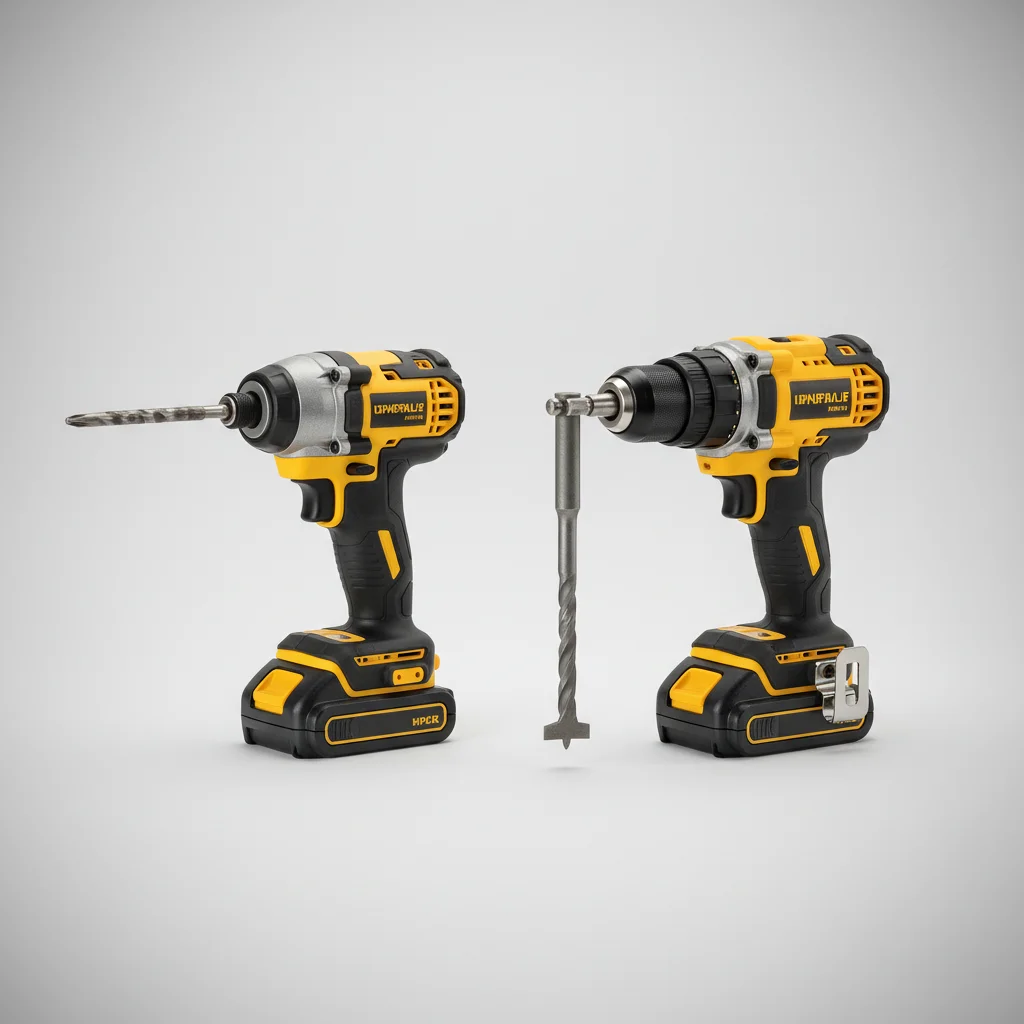
Understanding the difference between an impact driver and an impact drill is crucial for any DIYer or professional. While both tools are designed for driving fasteners, an impact driver excels at high-torque applications, delivering rotational force combined with rapid percussive blows, making it ideal for long screws and lag bolts. An impact drill, on the other hand, is a more versatile tool that can drill holes and drive fasteners, often featuring a clutch to prevent over-driving and a hammer function for masonry.
Understanding the Impact Driver’s Mechanism
An impact driver operates by delivering short, powerful bursts of rotational force, known as impacts, in addition to continuous rotation. This percussive action helps to overcome resistance when driving fasteners, especially in dense materials or with large screws. The internal mechanism typically involves a spring-loaded hammer that strikes an anvil, converting the motor’s rotational energy into these powerful impacts. This design allows impact drivers to generate significantly more torque than standard drills, often without the user needing to apply excessive force.
The primary benefit of an impact driver’s mechanism is its efficiency in driving fasteners. The impacts prevent cam-out (when the bit slips from the screw head) and reduce strain on the user’s wrist. They are particularly effective for repetitive tasks involving many fasteners, such as deck building or framing. Most impact drivers feature a 1/4-inch hex chuck, designed specifically for quick-change impact-rated bits.
How an Impact Drill Works
An impact drill, often referred to as a hammer drill with an impact function, combines the capabilities of a standard drill with a percussive mechanism for drilling into hard materials like concrete or brick. Unlike an impact driver, the ‘impact’ in an impact drill refers to a forward hammering motion along the axis of the bit, not rotational impacts. This hammering action pulverizes the material, while the rotation clears the debris, allowing for efficient drilling into masonry.
When used for driving fasteners, an impact drill functions much like a regular drill, relying on its rotational torque. Many impact drills include a clutch with multiple settings to prevent over-driving screws and damaging materials. They typically feature a keyless chuck that can accept a wider range of drill bits and driver bits, making them more versatile for general-purpose tasks around the home or job site.
Key Differences in Application and Performance
|
Our Picks for the Best Impact Driver in 2026
As an Amazon Associate I earn from qualifying purchases.
|
||
| Num | Product | Action |
|---|---|---|
| 1 | DEWALT DCF850B 20V Cordless Brushless Compact 1/4'' Impact Driver (Tool Only) (DCF850B-NBX) |

|
| 2 | BLACK+DECKER 20V MAX* POWERCONNECT 1/4 in. Cordless Impact Driver Kit (BDCI20C) |
|
| 3 | Milwaukee Electric - M18 Fuel. 1/4 HEX Impact Driver |
|
| 4 | DEWALT 20V MAX Cordless Impact Wrench, 1/2 Impact Gun, 4-Speed High Torque with Hog Ring Anvil and LED Light, Brushless Motor, Precision Wrench, Tool Only (DCF900B) |
|
| 5 | AVID POWER 20V Brushless Impact Driver Kit, 2220in-lbs High Torque, 2-Speed Mode, Variable Speed Cordless Impact Driver, Brake Stop Function, Compact Design with LED Light, 4 Sockets & 4 Bits Included |
|
| 6 | DEWALT 20V MAX Cordless Drill and Impact Driver, Power Tool Combo Kit , Includes 2 Batteries, Charger and Bag (DCK240C2) |
|
| 7 | DEWALT ATOMIC 20V MAX* Impact Driver, Cordless, Compact, 1/4-Inch, Tool Only (DCF809B) |
|
| 8 | Impact Driver: 21V 1/4" Hex Cordless Impact Driver, 230N.m (2,035in-lbs) Brushless Impact Driver Drill Set, 20Psc Screwdriver Bits, 2.0 Ah Battery, Variable Speed for DIY and Automotive |
|
| 9 | DEWALT 20V MAX Impact Driver, 1/4 Inch, Battery and Charger Included (DCF787D1) |
|
| 10 | DEWALT 20V MAX XR Impact Driver, 1/4 Inch High Torque Brushless 3 Speed Premium Cordless with LED Light, Extended Runtime, Tool Only (DCF845B) |
|
The fundamental difference between these two tools lies in their intended applications and how they deliver power. Impact drivers are specialized for driving fasteners, particularly those that require high torque. Their percussive rotational action makes them superior for driving long screws, lag bolts, and other demanding fastening tasks. They are less suitable for drilling holes, especially precise ones, due to their lack of a clutch and often higher RPMs.
Impact drills, conversely, are general-purpose tools. They excel at drilling holes in various materials, including wood, metal, and masonry (when the hammer function is engaged). While they can drive screws, they typically don’t offer the same level of torque or efficiency for heavy-duty fastening as an impact driver. Their clutch system provides more control for delicate fastening tasks, preventing damage to materials or fasteners.
- Fastening Power: Impact drivers offer significantly higher rotational torque for driving fasteners.
- Drilling Capability: Impact drills are designed for drilling holes, including masonry with their hammer function.
- Chuck Type: Impact drivers use a 1/4-inch hex chuck; impact drills use a keyless chuck for various bits.
- Control: Impact drills often have a clutch for precise torque control; impact drivers typically do not.
- Best Use: Impact drivers for heavy-duty fastening; impact drills for drilling and general fastening.
When to Choose Which Tool
Choosing between an impact driver and an impact drill depends entirely on your primary needs. If your work primarily involves driving a large number of screws, especially long or stubborn ones, an impact driver is the clear choice. It will save you time, effort, and reduce fatigue. Common applications include deck building, framing, installing subflooring, or assembling furniture with many fasteners.
If your projects involve a mix of drilling holes in various materials (wood, metal, plastic, and occasionally masonry) and driving screws, an impact drill (or hammer drill) offers greater versatility. It’s an excellent all-around tool for general home repairs, hanging pictures, assembling flat-pack furniture, or light-duty construction. For professionals who encounter both heavy-duty fastening and masonry drilling regularly, owning both tools is often the most efficient solution.
Conclusion
In summary, an impact driver is a specialized tool optimized for high-torque fastening, using rotational impacts to drive screws efficiently. An impact drill is a versatile tool capable of drilling holes in various materials and driving fasteners, with a hammer function for masonry. Understanding these distinct mechanisms and applications will help you select the right tool for your specific project needs, ensuring efficiency and preventing frustration on the job.
