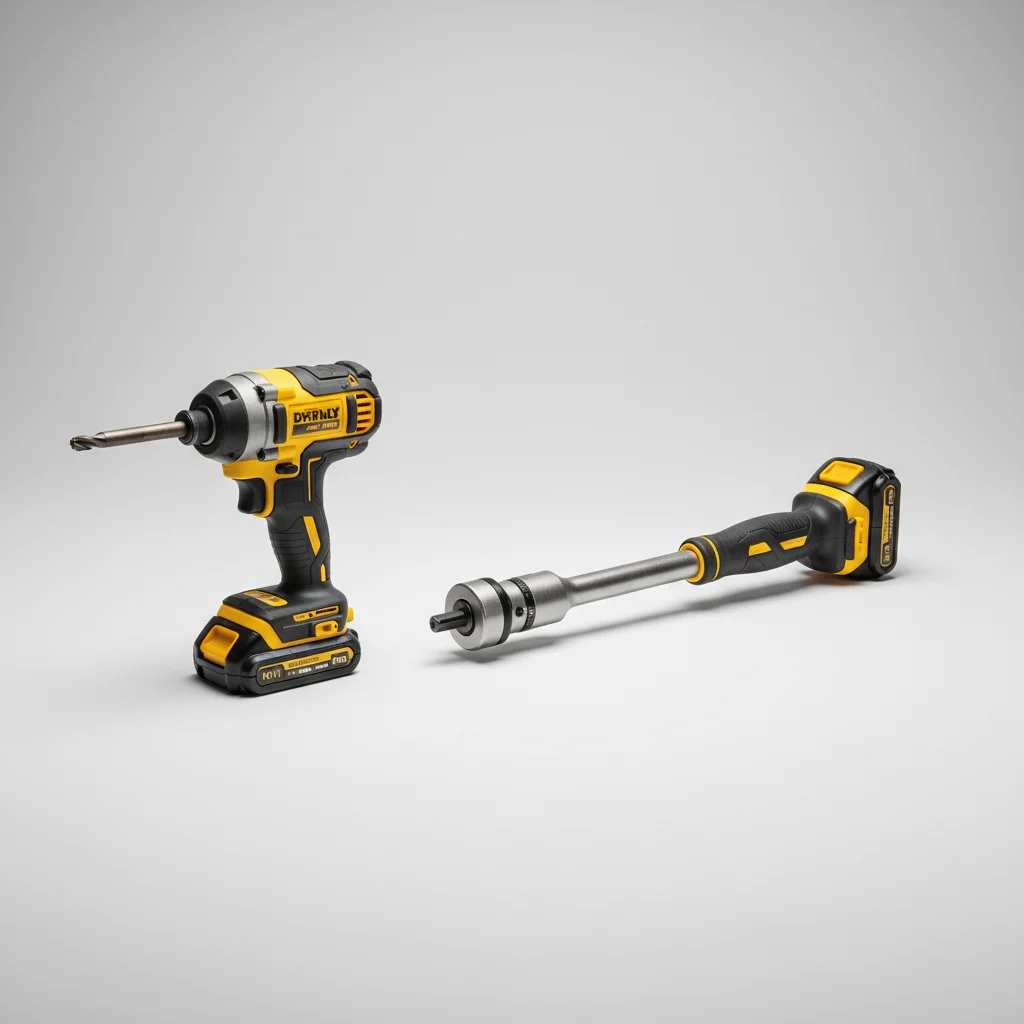
When tackling fasteners in confined areas, both an impact driver and a cordless ratchet offer distinct advantages. The choice between them largely depends on the specific task, the amount of torque required, and the accessibility of the fastener. For high-torque applications where space is still a concern, an impact driver often provides more power, while a cordless ratchet excels in extremely tight spots where even a compact impact driver might struggle to fit or maneuver.
An impact driver delivers rotational force combined with rapid, short bursts of impact to drive or remove fasteners. This impact mechanism allows it to generate significantly more torque than a standard drill, making it ideal for driving long screws, lag bolts, or breaking loose stubborn nuts. However, their bulkier head and often longer body can be a limitation in very restricted spaces. For browse all cordless impact articles on this site.
Understanding Cordless Ratchets
Cordless ratchets, on the other hand, are designed specifically for working in tight quarters. They resemble traditional hand ratchets but are powered by a small motor, allowing for quick and effortless tightening or loosening of nuts and bolts. Their slim profile and often articulated heads make them indispensable for automotive work, plumbing, and other applications where space is at a premium. While they offer convenience and speed, their torque output is generally much lower than that of an impact driver.
The primary benefit of a cordless ratchet is its ability to reach fasteners that an impact driver simply cannot. Imagine working on an engine bay or under a sink; the slender design of a ratchet allows it to snake into areas where an impact driver’s chuck or motor housing would be too wide. They are excellent for assembly tasks where precise, lower-torque fastening is needed without the risk of over-tightening.
Torque and Power Differences
The most significant difference between these two tools lies in their torque output. A typical 18V cordless impact driver can deliver anywhere from 1,500 to over 2,000 inch-pounds of torque, making it suitable for heavy-duty fastening. In contrast, most cordless ratchets provide between 30 to 80 foot-pounds (360 to 960 inch-pounds) of torque. This means an impact driver is far more capable of driving large fasteners into dense materials or breaking free rusted bolts.
For tasks requiring substantial power, such as driving 3-inch deck screws or removing lug nuts, the impact driver is the clear winner. However, for delicate work or when working with smaller fasteners that could easily strip under high torque, the controlled power of a cordless ratchet is often preferred. Some cordless ratchets also feature variable speed triggers, allowing for even finer control.
Applications and Best Use Cases
|
Our Picks for the Best Impact Driver in 2026
As an Amazon Associate I earn from qualifying purchases.
|
||
| Num | Product | Action |
|---|---|---|
| 1 | DEWALT 20V MAX Impact Driver, 1/4 Inch, Battery and Charger Included (DCF787D1) |

|
| 2 | DEWALT 20V MAX Cordless Drill and Impact Driver, Power Tool Combo Kit , Includes 2 Batteries, Charger and Bag (DCK240C2) |
|
| 3 | DEWALT DCF850B 20V Cordless Brushless Compact 1/4'' Impact Driver (Tool Only) (DCF850B-NBX) |
|
| 4 | AVID POWER 20V Brushless Impact Driver Kit, 2220in-lbs High Torque, 2-Speed Mode, Variable Speed Cordless Impact Driver, Brake Stop Function, Compact Design with LED Light, 4 Sockets & 4 Bits Included |
|
| 5 | BLACK+DECKER 20V MAX* POWERCONNECT 1/4 in. Cordless Impact Driver Kit (BDCI20C) |
|
| 6 | DEWALT ATOMIC 20V MAX* Impact Driver, Cordless, Compact, 1/4-Inch, Tool Only (DCF809B) |
|
| 7 | Impact Driver: 21V 1/4" Hex Cordless Impact Driver, 230N.m (2,035in-lbs) Brushless Impact Driver Drill Set, 20Psc Screwdriver Bits, 2.0 Ah Battery, Variable Speed for DIY and Automotive |
|
| 8 | DEWALT 20V MAX Cordless Impact Wrench, 1/2 Impact Gun, 4-Speed High Torque with Hog Ring Anvil and LED Light, Brushless Motor, Precision Wrench, Tool Only (DCF900B) |
|
| 9 | DEWALT 20V MAX XR Impact Driver, 1/4 Inch High Torque Brushless 3 Speed Premium Cordless with LED Light, Extended Runtime, Tool Only (DCF845B) |
|
| 10 | Milwaukee Electric - M18 Fuel. 1/4 HEX Impact Driver |
|
Consider your most frequent tasks when deciding. If you’re often driving long fasteners into wood, metal, or concrete, or dealing with very tight screws, an impact driver is indispensable. It’s a workhorse for construction, woodworking, and general DIY projects that involve significant fastening.
- Automotive repair, especially in engine bays or suspension work.
- Plumbing tasks, such as tightening pipe fittings in confined cabinets.
- Appliance repair, where access to internal components is limited.
- Furniture assembly, for quick and easy tightening of bolts.
- Any situation requiring precise, lower-torque fastening in a restricted area.
Conversely, if your work primarily involves assembling components with nuts and bolts in hard-to-reach places, especially in automotive or machinery maintenance, a cordless ratchet will be a game-changer. It significantly speeds up tasks that would otherwise require tedious manual ratcheting.
Bit and Socket Compatibility
Impact drivers typically use 1/4-inch hex shank bits, which are designed to withstand the impact forces. They can also use hex-to-square drive adapters for sockets, but this adds length and can reduce efficiency. Cordless ratchets, by design, come with a square drive (commonly 1/4-inch, 3/8-inch, or 1/2-inch) to directly accept sockets, making them perfectly suited for nut and bolt applications.
If your projects involve a mix of screws and bolts, you might find yourself needing both tools. An impact driver with a good set of impact-rated hex bits and a separate cordless ratchet with a socket set will cover a vast range of fastening needs.For those who frequently switch between driving screws and tightening bolts, some manufacturers offer combo kits that include both an impact driver and a cordless ratchet, providing a versatile solution for various tasks.
Making Your Decision
Ultimately, the choice between an impact driver and a cordless ratchet boils down to the specific demands of your work. If raw power for driving screws and breaking stubborn fasteners is your priority, and you have reasonable access, an impact driver is the superior choice. If you frequently find yourself contorting to reach nuts and bolts in extremely tight spaces, and lower torque is sufficient, a cordless ratchet will save you immense time and effort. Many professionals and serious DIYers find value in owning both tools, as they complement each other perfectly, covering a broader spectrum of fastening challenges.Consider the types of fasteners you encounter most often and the spatial constraints of your typical projects to make the best decision for your toolkit.
