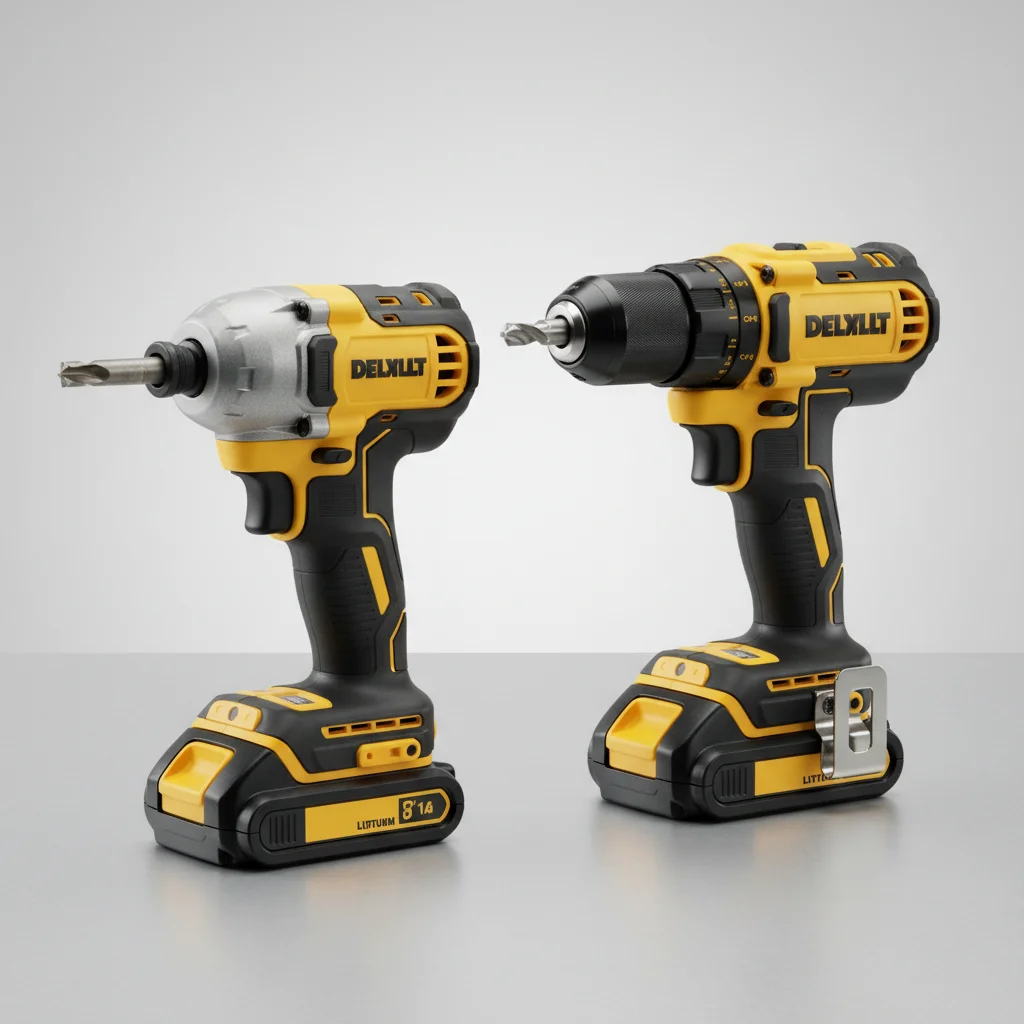
Deciding between an impact driver and a cordless drill is a common dilemma for both DIY enthusiasts and professionals. While both are essential tools for driving fasteners and drilling holes, they are designed for distinct purposes. The key difference lies in their torque delivery and operational mechanism: an impact driver excels at high-torque fastening with its rotational and concussive force, making it ideal for long screws and lag bolts, whereas a cordless drill provides consistent rotational power for precise drilling and lighter fastening tasks. Understanding these differences will help you choose the right tool for your specific needs.
Understanding the Impact Driver’s Power
An impact driver is engineered for high-torque applications, delivering short, powerful bursts of rotational and concussive force. This unique mechanism allows it to drive large fasteners, such as lag screws and deck screws, with significantly less effort and cam-out compared to a standard drill. The internal hammer and anvil system engage when resistance is met, providing the extra punch needed to overcome stubborn materials. This makes impact drivers particularly effective for repetitive fastening tasks in construction, woodworking, and automotive repair. For expert cordless impact reviews on this site.
The concussive action also reduces the strain on your wrist, as the tool absorbs much of the rotational kickback. This makes it a more comfortable option for extended use, especially when dealing with tough materials or long fasteners. Impact drivers typically operate at higher RPMs and IPMs (impacts per minute) than drills, further enhancing their efficiency in fastening applications.
The Versatility of a Cordless Drill
A cordless drill, often referred to simply as a drill, is a more versatile tool primarily designed for drilling holes and lighter fastening tasks. It provides continuous rotational force, making it excellent for precision drilling in wood, metal, and plastic. Most cordless drills come with a clutch mechanism that allows you to adjust the torque, preventing over-driving screws or stripping screw heads. This feature is crucial for delicate work or when working with softer materials.
Cordless drills also offer a wider range of speed settings, which is beneficial for different drilling applications. For instance, slower speeds are ideal for drilling larger holes or working with harder materials, while higher speeds are suitable for smaller holes or softer materials. The chuck on a cordless drill can accommodate a variety of drill bits and driver bits, making it a true multi-purpose tool for a wide array of projects around the home or job site.
Key Differences in Performance and Application
|
Our Picks for the Best Impact Driver in 2026
As an Amazon Associate I earn from qualifying purchases.
|
||
| Num | Product | Action |
|---|---|---|
| 1 | DEWALT 20V MAX Impact Driver, 1/4 Inch, Battery and Charger Included (DCF787D1) |

|
| 2 | Impact Driver: 21V 1/4" Hex Cordless Impact Driver, 230N.m (2,035in-lbs) Brushless Impact Driver Drill Set, 20Psc Screwdriver Bits, 2.0 Ah Battery, Variable Speed for DIY and Automotive |
|
| 3 | DEWALT 20V MAX Cordless Impact Wrench, 1/2 Impact Gun, 4-Speed High Torque with Hog Ring Anvil and LED Light, Brushless Motor, Precision Wrench, Tool Only (DCF900B) |
|
| 4 | Milwaukee Electric - M18 Fuel. 1/4 HEX Impact Driver |
|
| 5 | AVID POWER 20V Brushless Impact Driver Kit, 2220in-lbs High Torque, 2-Speed Mode, Variable Speed Cordless Impact Driver, Brake Stop Function, Compact Design with LED Light, 4 Sockets & 4 Bits Included |
|
| 6 | DEWALT 20V MAX XR Impact Driver, 1/4 Inch High Torque Brushless 3 Speed Premium Cordless with LED Light, Extended Runtime, Tool Only (DCF845B) |
|
| 7 | BLACK+DECKER 20V MAX* POWERCONNECT 1/4 in. Cordless Impact Driver Kit (BDCI20C) |
|
| 8 | DEWALT ATOMIC 20V MAX* Impact Driver, Cordless, Compact, 1/4-Inch, Tool Only (DCF809B) |
|
| 9 | DEWALT DCF850B 20V Cordless Brushless Compact 1/4'' Impact Driver (Tool Only) (DCF850B-NBX) |
|
| 10 | DEWALT 20V MAX Cordless Drill and Impact Driver, Power Tool Combo Kit , Includes 2 Batteries, Charger and Bag (DCK240C2) |
|
The fundamental difference between these two tools lies in their power delivery and intended use. An impact driver’s percussive action makes it superior for driving long or large fasteners into dense materials, where a drill might struggle or stall. For example, installing a deck or framing a wall would be significantly faster and easier with an impact driver. Conversely, a cordless drill’s consistent rotational force and adjustable clutch make it the go-to tool for drilling precise holes and driving smaller, more delicate fasteners where control is paramount.
- Fastening Power: Impact drivers deliver significantly more torque for driving large, stubborn fasteners.
- Drilling Precision: Cordless drills offer better control and adjustable torque for precise drilling and delicate fastening.
- Bit Compatibility: Impact drivers typically use hex-shank bits, while drills use round-shank bits and have a wider chuck range.
- User Comfort: Impact drivers reduce wrist strain during heavy fastening due to their percussive action.
- Noise Level: Impact drivers are generally louder due to their impacting mechanism.
When to Choose an Impact Driver
You should opt for an impact driver when your primary tasks involve driving a large volume of screws, especially long or large-diameter fasteners, into tough materials. This includes projects like building decks, installing subflooring, assembling large furniture, or any task requiring significant fastening power. If you frequently encounter situations where a standard drill struggles to drive screws all the way in, an impact driver will be a game-changer.
When to Choose a Cordless Drill
A cordless drill is the better choice if your work involves a mix of drilling holes and light to medium fastening. It’s indispensable for tasks such as hanging pictures, assembling flat-pack furniture, drilling pilot holes, or any application where precision and control over torque are more important than brute force. If you only need to drive occasional screws and primarily drill holes, a cordless drill offers the versatility you need without the added power (and noise) of an impact driver.
Can One Replace the Other?
While there’s some overlap in their capabilities, neither tool can fully replace the other without significant compromises. An impact driver can drill holes, but it’s less precise and can be overkill for smaller holes, potentially damaging the material or bit. A cordless drill can drive screws, but it will struggle with larger fasteners and can cause user fatigue or stripped screw heads. For serious DIYers and professionals, owning both an impact driver and a cordless drill is often the most efficient and effective solution, as they complement each other perfectly, providing the right tool for every task.

I’ve always just used my old cordless drill for everything, but after reading about the concussive force an impact driver uses, I finally bought one. It’s a game-changer for driving lag bolts into deck posts. My drill would always struggle and sometimes strip the heads, but this thing just sinks them in effortlessly. Wish I’d made the switch sooner!
I got an impact driver hoping it would replace my drill for everything, especially after seeing it mentioned for driving fasteners. While it’s great for those really tough jobs, I found it’s not as precise for drilling smaller holes, which the post did touch on with its mention of consistent rotational power. I still need my cordless drill for delicate work, so it’s not a one-tool solution for me. Good to know the differences though.
I picked up a new impact driver for a fence project and it handled all the long screws like a champ. The article really highlighted how much better it is for high-torque fastening compared to a regular drill. My only minor gripe is that it’s a bit heavier than I expected, which can be tiring after a full day of use. Still, totally worth it for the power.
As a professional, I rely on my tools daily. The distinction between an impact driver’s concussive force and a drill’s consistent rotational power is spot on. I use my impact driver for framing and decking, where it excels at driving large fasteners quickly. For precise pilot holes or delicate cabinet work, my cordless drill is indispensable. Having both is key for efficiency on the job site.