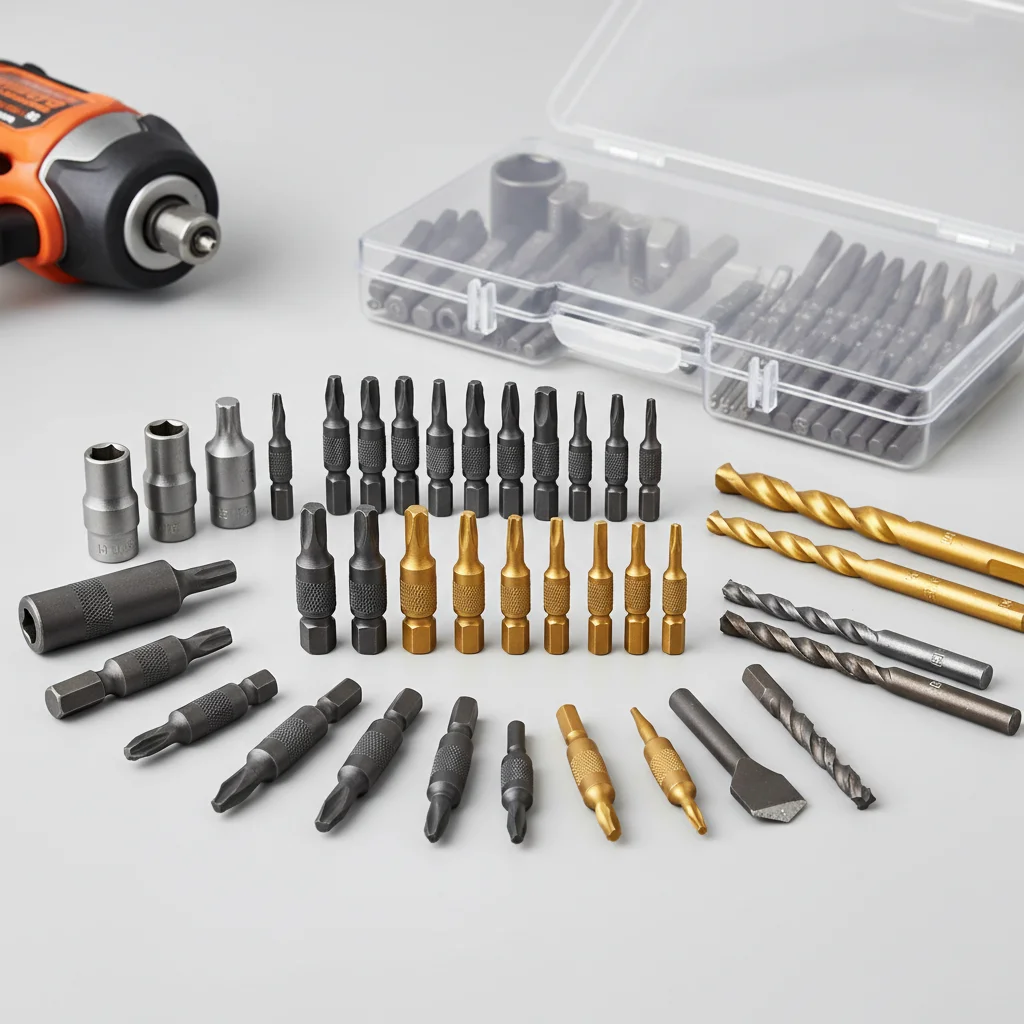
Choosing the correct impact driver bit type is crucial for efficient work and preventing damage to fasteners or the bit itself. There are five primary types of impact driver bits you’ll encounter: Phillips, Slotted, Torx, Square (Robertson), and Hex. Each is designed for specific fastener heads and applications, ensuring optimal torque transfer and reducing cam-out.
Understanding Common Bit Types and Their Uses
The most frequently used impact driver bits are Phillips and Slotted. Phillips bits, with their cross-shaped tip, are ubiquitous for general construction and woodworking. While common, they are prone to cam-out if not used with proper pressure. Slotted bits, characterized by a single straight line, are less common in impact driving due to their high tendency to slip, but they are still found in older fasteners or specific hardware. For these, ensure the bit fits snugly to minimize slippage.
Specialized Bits for Enhanced Performance
Torx bits, identifiable by their six-point star shape, offer superior torque transfer and significantly reduce cam-out compared to Phillips. They are widely used in automotive, electronics, and decking applications where high torque is required. Square (Robertson) bits, with their square-shaped tip, are popular in Canada and for woodworking due to their excellent grip and resistance to cam-out. They are particularly effective for driving self-tapping screws and cabinet assembly.
Hex Bits and Their Niche Applications
|
Our Picks for the Best Impact Driver in 2026
As an Amazon Associate I earn from qualifying purchases.
|
||
| Num | Product | Action |
|---|---|---|
| 1 | DEWALT 20V MAX Impact Driver, 1/4 Inch, Battery and Charger Included (DCF787D1) |

|
| 2 | Impact Driver: 21V 1/4" Hex Cordless Impact Driver, 230N.m (2,035in-lbs) Brushless Impact Driver Drill Set, 20Psc Screwdriver Bits, 2.0 Ah Battery, Variable Speed for DIY and Automotive |
|
| 3 | DEWALT DCF850B 20V Cordless Brushless Compact 1/4'' Impact Driver (Tool Only) (DCF850B-NBX) |
|
| 4 | DEWALT 20V MAX XR Impact Driver, 1/4 Inch High Torque Brushless 3 Speed Premium Cordless with LED Light, Extended Runtime, Tool Only (DCF845B) |
|
| 5 | Milwaukee Electric - M18 Fuel. 1/4 HEX Impact Driver |
|
| 6 | DEWALT ATOMIC 20V MAX* Impact Driver, Cordless, Compact, 1/4-Inch, Tool Only (DCF809B) |
|
| 7 | DEWALT 20V MAX Cordless Drill and Impact Driver, Power Tool Combo Kit , Includes 2 Batteries, Charger and Bag (DCK240C2) |
|
| 8 | BLACK+DECKER 20V MAX* POWERCONNECT 1/4 in. Cordless Impact Driver Kit (BDCI20C) |
|
| 9 | AVID POWER 20V Brushless Impact Driver Kit, 2220in-lbs High Torque, 2-Speed Mode, Variable Speed Cordless Impact Driver, Brake Stop Function, Compact Design with LED Light, 4 Sockets & 4 Bits Included |
|
| 10 | DEWALT 20V MAX Cordless Impact Wrench, 1/2 Impact Gun, 4-Speed High Torque with Hog Ring Anvil and LED Light, Brushless Motor, Precision Wrench, Tool Only (DCF900B) |
|
Hex bits, featuring a six-sided shape, are primarily used for fasteners with hexagonal recesses, such as machine screws, set screws, and some lag bolts. They provide a strong, positive engagement, making them ideal for applications requiring precise torque and where stripping the fastener head is a concern. While not as common for general driving as Phillips or Torx, they are indispensable for specific tasks.
Factors to Consider When Selecting Bits
When selecting an impact driver bit, consider the material of the bit, its length, and whether it’s impact-rated. Impact-rated bits are specifically designed to withstand the high torque and rapid impacts generated by an impact driver, preventing premature breakage. Longer bits are useful for reaching fasteners in recessed areas, while shorter bits offer more control in tight spaces. Always match the bit type and size precisely to the fastener head to ensure optimal performance and prevent damage.
- Always use impact-rated bits for durability.
- Match the bit type exactly to the fastener head.
- Consider bit length for accessibility and control.
- Inspect bits for wear before use to prevent cam-out.
- Keep a variety of bit types and sizes on hand.
Maintaining Your Impact Driver Bits
Proper maintenance of your impact driver bits extends their lifespan and ensures consistent performance. Store bits in a dry environment to prevent rust and organize them to easily find the correct type. Regularly inspect bits for signs of wear, such as rounded edges or cracks, and replace them as needed. Using worn bits can lead to stripped fasteners and inefficient work.
