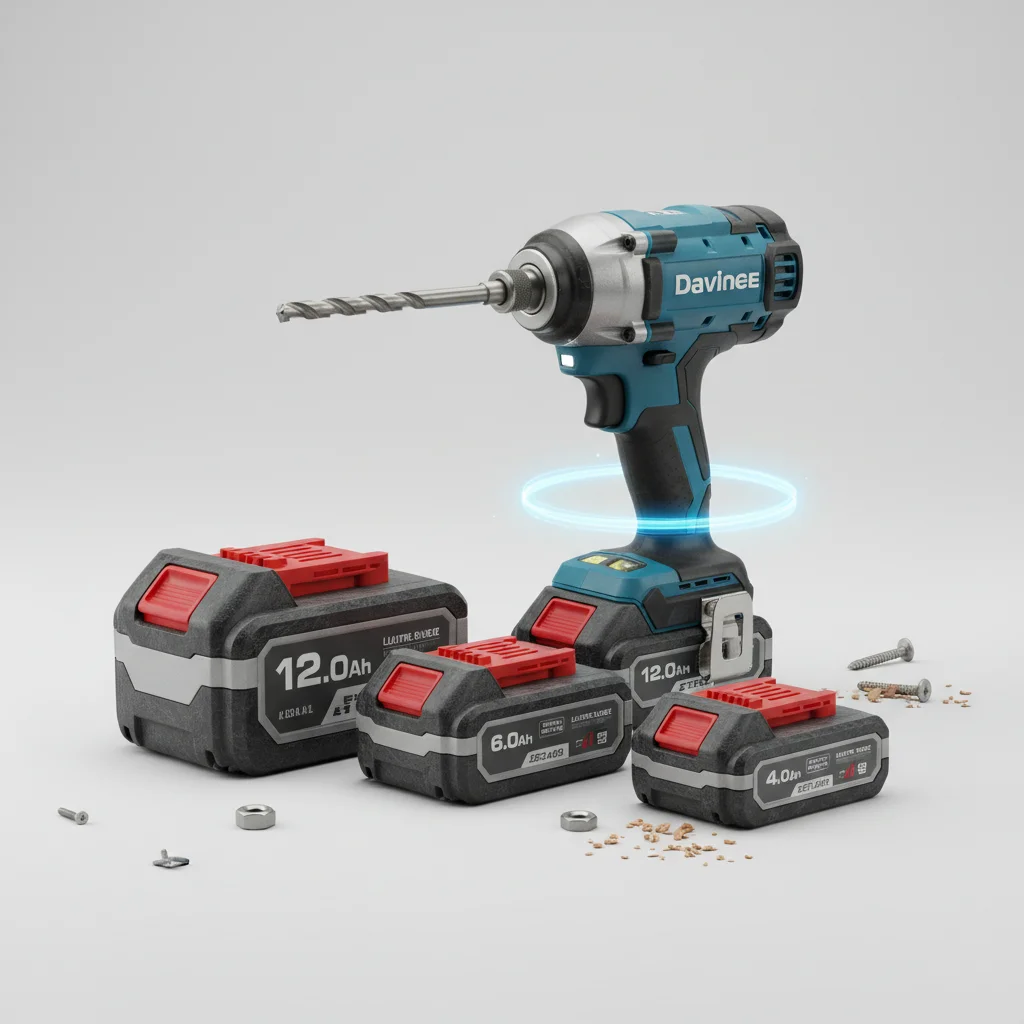
Understanding impact driver battery life is crucial for uninterrupted work, and on average, a fully charged 18V lithium-ion battery for a cordless impact driver will last between 30 minutes to 2 hours of continuous use, depending on the task’s intensity and the battery’s amp-hour (Ah) rating. This duration can vary significantly based on factors like the type of material being driven into, the fastener size, and the age and condition of the battery itself. For most DIYers and professionals, knowing these variables helps in planning projects and ensuring you have enough power to get the job done efficiently.
Factors Influencing Battery Longevity Per Charge
Several key factors dictate how long your impact driver battery will last on a single charge. The most significant is the amp-hour (Ah) rating of the battery; a 5.0Ah battery will inherently provide more run time than a 2.0Ah battery under similar conditions. Beyond capacity, the intensity of the application plays a major role. Driving large lag screws into dense hardwood will drain a battery much faster than driving smaller screws into softwood or drywall. The efficiency of the impact driver’s motor, particularly whether it’s brushed or brushless, also impacts battery consumption, with brushless motors generally offering superior efficiency and longer run times.
Environmental conditions, such as extreme cold or heat, can also affect battery performance and overall life. Operating in very cold temperatures can temporarily reduce a battery’s capacity, while excessive heat can accelerate degradation. Regular maintenance and proper charging practices are also vital for maximizing the life of each charge.
Maximizing Your Impact Driver Battery’s Lifespan
To get the most out of your impact driver batteries, several practices can extend both their per-charge run time and their overall lifespan. Always use the charger specifically designed for your battery pack; mixing chargers can lead to inefficient charging or even damage. Avoid completely draining your batteries before recharging them, as modern lithium-ion batteries do not suffer from a ‘memory effect’ and benefit from being topped off. Storing batteries in a cool, dry place away from direct sunlight and extreme temperatures also helps preserve their health.
- Charge batteries before they are completely depleted.
- Use the manufacturer-recommended charger.
- Store batteries in a cool, dry environment.
- Avoid leaving batteries on the charger indefinitely after they are full.
- Clean battery terminals regularly to ensure good contact.
Understanding Battery Chemistry and Its Impact
|
Our Picks for the Best Impact Driver in 2026
As an Amazon Associate I earn from qualifying purchases.
|
||
| Num | Product | Action |
|---|---|---|
| 1 | DEWALT 20V MAX Cordless Drill and Impact Driver, Power Tool Combo Kit , Includes 2 Batteries, Charger and Bag (DCK240C2) |

|
| 2 | DEWALT 20V MAX Cordless Impact Wrench, 1/2 Impact Gun, 4-Speed High Torque with Hog Ring Anvil and LED Light, Brushless Motor, Precision Wrench, Tool Only (DCF900B) |
|
| 3 | DEWALT DCF850B 20V Cordless Brushless Compact 1/4'' Impact Driver (Tool Only) (DCF850B-NBX) |
|
| 4 | DEWALT 20V MAX XR Impact Driver, 1/4 Inch High Torque Brushless 3 Speed Premium Cordless with LED Light, Extended Runtime, Tool Only (DCF845B) |
|
| 5 | DEWALT ATOMIC 20V MAX* Impact Driver, Cordless, Compact, 1/4-Inch, Tool Only (DCF809B) |
|
| 6 | BLACK+DECKER 20V MAX* POWERCONNECT 1/4 in. Cordless Impact Driver Kit (BDCI20C) |
|
| 7 | Milwaukee Electric - M18 Fuel. 1/4 HEX Impact Driver |
|
| 8 | DEWALT 20V MAX Impact Driver, 1/4 Inch, Battery and Charger Included (DCF787D1) |
|
| 9 | AVID POWER 20V Brushless Impact Driver Kit, 2220in-lbs High Torque, 2-Speed Mode, Variable Speed Cordless Impact Driver, Brake Stop Function, Compact Design with LED Light, 4 Sockets & 4 Bits Included |
|
| 10 | Impact Driver: 21V 1/4" Hex Cordless Impact Driver, 230N.m (2,035in-lbs) Brushless Impact Driver Drill Set, 20Psc Screwdriver Bits, 2.0 Ah Battery, Variable Speed for DIY and Automotive |
|
The vast majority of modern cordless impact drivers utilize lithium-ion (Li-ion) batteries, which offer a high energy density, low self-discharge rate, and no memory effect, making them ideal for power tools. Older nickel-cadmium (NiCd) and nickel-metal hydride (NiMH) batteries, while still found in some tools, have largely been phased out due to their lower energy density, memory effect issues, and environmental concerns. Li-ion batteries provide consistent power output throughout their discharge cycle, meaning your tool won’t lose power as the battery drains, unlike some older chemistries.
The internal resistance of a battery also plays a role; as batteries age, their internal resistance can increase, leading to less efficient power delivery and shorter run times. This is a natural part of battery degradation, but proper care can slow this process. For reliable performance, consider investing in high-quality batteries from reputable brands.
When to Replace Your Impact Driver Battery
Even with the best care, impact driver batteries have a finite lifespan, typically measured in charge cycles. A common lithium-ion battery can endure between 300 to 500 charge cycles before its capacity significantly diminishes. Signs that your battery needs replacing include a noticeable reduction in run time, a failure to hold a charge for long, or the battery pack becoming excessively hot during use or charging. If your battery takes an unusually long time to charge or doesn’t charge at all, it’s likely time for a replacement.
Investing in new batteries can often revitalize an older tool, saving you the cost of purchasing an entirely new impact driver. Always check the compatibility of replacement batteries with your specific tool model to ensure optimal performance and safety.
The Future of Impact Driver Battery Technology
Battery technology for power tools is continually evolving, with manufacturers focusing on increasing energy density, reducing charge times, and enhancing durability. We are seeing advancements in cell design, improved thermal management systems, and smart battery technology that communicates with the tool and charger to optimize performance and extend life. These innovations promise even longer run times and more efficient power delivery for future generations of cordless impact drivers, making them even more versatile and indispensable for both professional and DIY applications.
