To remove a stuck bit from an impact driver, first disconnect the battery and apply a penetrating lubricant like WD-40 around the bit’s base and the chuck’s quick-release collar, allowing it to soak for several hours. Then, use pliers to firmly grasp the bit while pulling the collar forward, twisting and pulling the bit outward. If the bit remains stubborn, reinsert the battery, set the driver to reverse, and gently tap the trigger in short bursts against a scrap piece of wood to help dislodge it.
Why Do Impact Driver Bits Get Stuck?
Understanding why bits get stuck can help prevent future occurrences. Several factors contribute to this common issue:
- Rust and Corrosion: Exposure to moisture or lack of proper storage can lead to rust buildup on the bit shank or inside the chuck mechanism, causing components to seize.
- Dirt and Debris: Fine dust, wood shavings, or metal fragments can accumulate within the chuck’s quick-release mechanism, preventing the retaining ball bearing from retracting fully.
- Excessive Torque and Wear: Repeated high-impact use can deform the hex shank of the bit, causing it to bind within the chuck’s socket. This is especially true for non-impact rated bits which are not designed to withstand the rotational forces and hammering action of an impact driver.
- Overtightening: Applying excessive force when seating a bit can sometimes cause it to wedge tightly in place.
- Broken Bits: In some unfortunate cases, a bit might snap inside the chuck, leaving a stubborn fragment lodged within the mechanism.
Essential Tools You’ll Need
Before you begin, gather the following tools. Having them on hand will streamline the removal process and ensure your safety.
- Penetrating Lubricant: Such as WD-40, PB Blaster, or a similar rust-loosening spray.
- Pliers: Vise grips or channel locks for a firm, non-slip grip on the bit.
- Small Hammer: For gentle tapping, not forceful blows.
- Flat-Head Screwdriver or Chisel: To assist with gentle prying or tapping behind the bit.
- Bench Vise (Optional): Can provide stability when more force is required.
- Safety Gear: Always wear safety glasses and gloves to protect your hands and eyes from debris or slippage.
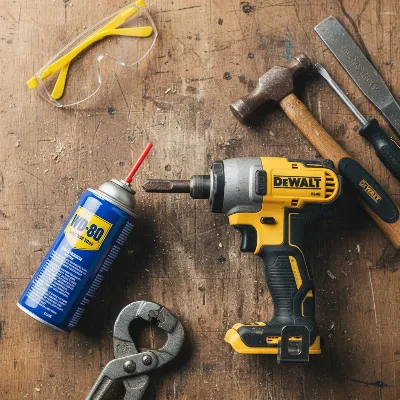 A collection of tools needed to remove a stuck impact driver bit, including lubricant, pliers, hammer, and safety glasses, arranged neatly on a workbench.
Step-by-Step Guide to Removing a Stuck Impact Driver Bit
Removing a stuck bit requires patience and a systematic approach. Follow these steps carefully to free your bit without damaging your tool.
Step 1: Safety First
Before attempting any repairs or bit removal, always prioritize safety.
- Remove the Battery: Disconnect the power source immediately to prevent accidental activation of the impact driver.
- Wear Protective Gear: Put on your safety glasses and gloves to protect yourself from potential flying debris or sharp edges.
- Secure the Tool: Place the impact driver on a stable surface, or secure it in a bench vise if available, to prevent it from moving unexpectedly during the process.
Step 2: Lubricate the Chuck
Lubrication is often the first and most crucial step, especially if rust or grime is suspected.
- Apply Lubricant: Generously spray a penetrating lubricant like WD-40 around the base of the stuck bit where it enters the chuck, and also around the chuck’s quick-release collar. Aim to get the lubricant into the seams of the mechanism.
- Allow to Soak: Let the lubricant penetrate the seized parts for at least a few hours, or ideally, overnight. This gives the formula time to break down rust and loosen trapped debris. You can reapply the lubricant periodically during this soaking period.
Step 3: Manipulate the Collar
The quick-release collar is designed to retract, allowing the bit to be inserted or removed. If it’s stuck, it needs to be freed.
- Attempt to Pull Collar: After soaking, try to pull the quick-release collar forward. If it moves even slightly, that’s a good sign.
- Gentle Tapping (if collar is stuck): If the collar remains seized, you can try gently tapping it.
- Using a small hammer, lightly tap around the circumference of the collar while simultaneously attempting to pull it forward.
- Alternatively, use pliers or mole grips to grasp the collar firmly and apply gentle, rotational pressure while pulling forward. The goal is to loosen any internal binding without bending or damaging the collar.
Step 4: Loosen the Bit with Impact Action
Sometimes, the bit itself is wedged in the hex socket, and a little targeted force can help.
- Engage Reverse Impact:
- Reinsert the battery into the impact driver.
- Find a scrap piece of wood or a sacrificial screw.
- Place the tip of the stuck bit onto the wood or screw.
- Set the impact driver to its reverse setting.
- Gently tap the trigger in short, controlled bursts. The impact action in reverse can help “un-cant” the bit from the internal hex socket.
- “The reverse trick does work. Have done it a bunch.”
- Gentle Tapping on the Bit: If engaging reverse impact isn’t feasible or doesn’t work:
- Remove the battery for safety.
- Hold the impact driver firmly.
- Using a small hammer and a flat-head screwdriver (or a thin punch), gently tap on the very end of the bit, trying to drive it slightly inward or tap around its sides. Be extremely careful not to hit the chuck itself, as this can cause damage. The aim is to shock the bit slightly to break any corrosion or binding.
Step 5: Extract the Bit
Once the collar moves freely and the bit feels somewhat loose, it’s time for extraction.
- Grasp and Twist: Pull the chuck collar fully forward and hold it there.
- Use Pliers or Vise Grips: Firmly grasp the bit with your pliers or vise grips.
- Twist and Pull: While holding the collar forward, simultaneously twist the bit back and forth with the pliers and pull outward with steady force. The twisting motion helps break any remaining bond.
- Bench Vise Method (for stubborn bits): If the bit is extremely stubborn, remove the battery. Carefully clamp the hex shank of the bit (not the tip) in a bench vise, ensuring you protect the bit with soft jaws if possible to prevent marring. Then, pull the impact driver body away from the bit while holding the collar forward. This leverages the strength of the vise against the tool.
Tips to Prevent Bits from Getting Stuck
Prevention is always better than a cure. Implement these practices to minimize future stuck bit incidents:
- Use Impact-Rated Bits: Always use bits specifically designed for impact drivers. These bits are made from harder, more durable steel and are less prone to deforming under high torque.
- Keep Bits and Chuck Clean: Regularly clean your bits and the impact driver chuck. Use compressed air to blow out debris from the chuck mechanism after each use.
- Regular Lubrication: Apply a light, non-greasy lubricant to the chuck’s quick-release mechanism periodically, especially if you work in dusty or damp environments. This keeps the internal components moving smoothly.
- Utilize Quick-Release Bit Holders/Extensions: For frequently changed bits, a quick-release bit holder can act as an intermediary, taking the brunt of wear and tear and making bit changes much easier. If a bit gets stuck, it might just be stuck in the extension, which is often easier to free or replace.
- Avoid Overtightening: While impact drivers deliver significant torque, avoid excessive, prolonged impacting that can deform the bit shank or even the screw head.
- Store Properly: Keep your impact driver and bits in a dry, clean environment to prevent rust and corrosion.
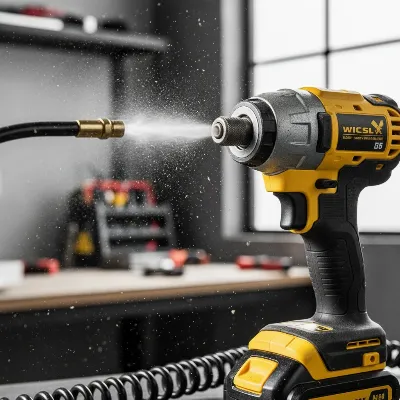 An impact driver chuck being cleaned with compressed air, illustrating proper maintenance to prevent bits from getting stuck.
When to Seek Professional Help or Replace Parts
While most stuck bits can be removed with DIY methods, there are situations where professional intervention or part replacement might be necessary:
- Damaged Chuck Mechanism: If the quick-release collar is bent, cracked, or the internal ball bearing mechanism is visibly damaged, it may be beyond a simple DIY fix.
- Broken Bit Fragment: If a bit has snapped off deep inside the chuck and cannot be grasped or dislodged, disassembling the chuck might be required. This can be complex and may void warranties, so professional repair or chuck replacement is often the safest route.
- Persistent Sticking: If bits continue to get stuck frequently despite proper cleaning, lubrication, and using impact-rated bits, the internal components of the chuck might be worn out and need replacement.
- All DIY Methods Fail: After exhausting all the troubleshooting steps outlined, if the bit remains firmly lodged, it might be time to consult a qualified tool repair technician.
> “Impact drivers are built tough, but like any tool, they benefit from regular care. A little lubricant and a quick clean can save you a lot of headache down the road.” – John Smith, Master Electrician and Tool Repair Specialist
Conclusion
A stuck bit in your impact driver can be a frustrating setback, but with the right approach and a bit of patience, it’s a problem you can usually solve yourself. By applying penetrating lubricant, using controlled force with pliers or the driver’s reverse action, and prioritizing safety, you can often free even the most stubborn bits. Remember that consistent maintenance, like keeping your chuck clean and lubricated, and using appropriate impact-rated bits, is key to preventing these issues from arising. Don’t let a jammed bit slow you down—get your tool back to peak performance! What’s your go-to trick for freeing a stubborn bit?
Frequently Asked Questions
Can I use regular drill bits in an impact driver?
No, it is strongly discouraged to use regular drill bits in an impact driver. These bits are not designed to withstand the high torque and impacting force, which can easily cause them to break, bend, or get stuck, potentially damaging your tool. Always use impact-rated bits for safety and tool longevity.
How do I maintain my impact driver chuck to prevent bits from sticking?
Regular maintenance for your impact driver chuck involves using compressed air to clean out dust and debris after each use. Additionally, periodically apply a light, non-greasy penetrating oil or specialized chuck lubricant around the quick-release collar to ensure the internal ball bearings and springs move smoothly.
What are the common reasons bits break inside an impact driver?
Bits commonly break inside an impact driver due to using non-impact rated bits, applying excessive side pressure during operation, or using bits that are already worn or damaged. The immense force generated by the impact mechanism can snap weaker bits, especially when driving into hard materials without pilot holes.
Is it a common problem for impact driver bits to get stuck?
Yes, it is a relatively common occurrence for bits to get stuck in impact drivers. This often happens after prolonged use, in dusty or damp environments, or if proper maintenance is neglected. Fortunately, most stuck bits can be resolved using the methods described in this guide.
When should I seek professional help for a stuck impact driver bit?
You should seek professional help if the chuck mechanism is visibly damaged (bent, cracked collar), a bit fragment is deeply lodged and cannot be removed, or if bits frequently get stuck despite proper cleaning and lubrication. Consulting a qualified tool repair technician is recommended in these situations to avoid further damage or voiding warranties.
How to Remove a Stuck Bit from an Impact Driver
Follow these steps to safely and effectively remove a stubborn bit from your impact driver without damaging the tool.
Always remove the battery from your impact driver to prevent accidental activation. Wear safety glasses and gloves to protect yourself from debris. Secure the tool on a stable surface or in a bench vise to keep it from moving during the process.
Generously spray a penetrating lubricant, such as WD-40, around the base of the stuck bit and the quick-release collar. Allow the lubricant to soak for several hours, or ideally overnight, to break down rust and loosen debris. Reapply periodically for best results.
After soaking, attempt to pull the quick-release collar forward. If it remains seized, gently tap around its circumference with a small hammer while pulling, or use pliers to apply gentle rotational pressure. The goal is to free any internal binding without causing damage.
If the bit is still wedged, reinsert the battery, set the driver to reverse, and gently tap the trigger against a scrap piece of wood. Alternatively, with the battery removed, gently tap the end of the bit with a small hammer and flat-head screwdriver to shock it loose, being careful not to hit the chuck.
Pull the chuck collar fully forward and hold it. Firmly grasp the bit with pliers or vise grips. While holding the collar, twist the bit back and forth with the pliers and pull outward with steady force. For extremely stubborn bits, clamp the bit's hex shank in a bench vise (with soft jaws) and pull the impact driver body away while holding the collar forward.

This was so helpful! I had a drill bit stuck in my Ryobi impact driver for weeks and was about to give up. The combination of the lubricant and then the reverse tapping against a scrap piece of wood finally did the trick. It popped right out! I’m definitely going to be more careful about proper storage to prevent rust going forward.
The advice about rust and corrosion is spot on, that’s usually my problem. However, I found that even with the penetrating lubricant, some bits just won’t budge without a lot of force. The reverse tapping method didn’t quite work for my really seized-up Torx bit, I ended up having to take it to a friend with a bench vise.
Good tips here! I always forget to disconnect the battery first, which is a crucial safety step. My bits often get stuck due to dirt and debris from drywall work, so I’m going to be more diligent about cleaning out the chuck. The pliers method combined with pulling the collar forward finally got out a hex bit that was driving me crazy.
I’ve had bits get stuck before, and that WD-40 trick really works wonders. I usually just try to muscle it out, but letting the penetrating lubricant soak for a few hours made a huge difference. The tip about tapping it in reverse against wood was also a lifesaver for a really stubborn Phillips head I had in my DeWalt. Great advice!