An impact driver can replace a regular drill for many DIY tasks, particularly for drilling pilot holes and small-to-medium holes (up to 1/2 inch for twist bits) in wood or soft metals, provided you use impact-rated hex-shank drill bits. However, for precision drilling, large diameter holes, or delicate materials, a standard drill with its continuous rotational force and adjustable clutch offers superior control and cleaner results. Understanding the tool’s limitations and using the correct accessories are crucial for optimal performance and preventing damage to your project or tool.
What is an Impact Driver?
An impact driver is a power tool specifically engineered for driving fasteners with high torque and efficiency. Unlike a standard drill that provides continuous rotational force, an impact driver delivers its power in short, rapid bursts of rotational impact when it encounters resistance. This unique “hammering” action, combined with rotation, makes it exceptionally good at driving long screws, lag bolts, and other fasteners into dense materials like hardwood or metal, with less effort and reduced wrist strain for the user. Its compact size and lightweight design also make it ideal for working in tight spaces or overhead where a larger drill might be cumbersome.
Types of Impact Drivers on the Market
Impact drivers come in various forms, each suited for different applications and user preferences. Understanding these types helps in choosing the right tool for your specific DIY needs.
Cordless Impact Drivers
Cordless impact drivers, powered by rechargeable lithium-ion batteries, offer unparalleled portability and flexibility. They are the most common type for DIY and professional use, allowing users to work without the constraint of power outlets or extension cords. Battery voltage (e.g., 12V, 18V, 20V) typically dictates their power and runtime, with higher voltages offering more torque and longer operation.
Corded Impact Drivers
While less common for general DIY, corded impact drivers provide consistent, uninterrupted power for extended, heavy-duty tasks. They eliminate concerns about battery life but require proximity to a power source, limiting their mobility. These are often preferred for workshop settings or projects where continuous high-power output is critical.
Hydraulic Impact Drivers
Hydraulic impact drivers are a specialized category known for their quieter operation and smoother performance. They use an oil-based mechanism to produce the impacting action, which significantly reduces noise and vibration compared to traditional mechanical impact drivers. This makes them particularly suitable for indoor use or prolonged tasks where user comfort and noise reduction are priorities.
Comparing Cordless and Corded Impact Drivers
The primary distinction between cordless and corded impact drivers lies in their power source and resulting portability versus sustained performance. Cordless models offer freedom of movement, making them perfect for on-site jobs, overhead work, or remote locations. However, their runtime is limited by battery capacity. Corded versions, conversely, provide endless power for the longest, most demanding projects without the need to swap batteries, but they are tethered to an outlet. For most DIYers, a cordless impact driver strikes the best balance of power and convenience.
Factors to Consider When Choosing an Impact Driver
Selecting the right impact driver involves more than just picking a brand. Several key specifications determine its suitability for your tasks.
Torque – The Most Crucial Factor
|
Our Picks for the Best Impact Driver in 2026
As an Amazon Associate I earn from qualifying purchases.
|
||
| Num | Product | Action |
|---|---|---|
| 1 | AVID POWER 20V Brushless Impact Driver Kit, 2220in-lbs High Torque, 2-Speed Mode, Variable Speed Cordless Impact Driver, Brake Stop Function, Compact Design with LED Light, 4 Sockets & 4 Bits Included |

|
| 2 | Impact Driver: 21V 1/4" Hex Cordless Impact Driver, 230N.m (2,035in-lbs) Brushless Impact Driver Drill Set, 20Psc Screwdriver Bits, 2.0 Ah Battery, Variable Speed for DIY and Automotive |
|
| 3 | DEWALT 20V MAX XR Impact Driver, 1/4 Inch High Torque Brushless 3 Speed Premium Cordless with LED Light, Extended Runtime, Tool Only (DCF845B) |
|
| 4 | Milwaukee Electric - M18 Fuel. 1/4 HEX Impact Driver |
|
| 5 | DEWALT 20V MAX Impact Driver, 1/4 Inch, Battery and Charger Included (DCF787D1) |
|
| 6 | DEWALT 20V MAX Cordless Drill and Impact Driver, Power Tool Combo Kit , Includes 2 Batteries, Charger and Bag (DCK240C2) |
|
| 7 | DEWALT ATOMIC 20V MAX* Impact Driver, Cordless, Compact, 1/4-Inch, Tool Only (DCF809B) |
|
| 8 | DEWALT 20V MAX Cordless Impact Wrench, 1/2 Impact Gun, 4-Speed High Torque with Hog Ring Anvil and LED Light, Brushless Motor, Precision Wrench, Tool Only (DCF900B) |
|
| 9 | DEWALT DCF850B 20V Cordless Brushless Compact 1/4'' Impact Driver (Tool Only) (DCF850B-NBX) |
|
| 10 | BLACK+DECKER 20V MAX* POWERCONNECT 1/4 in. Cordless Impact Driver Kit (BDCI20C) |
|
Torque, measured in inch-pounds (in-lbs) or Newton-meters (Nm), represents the rotational force an impact driver can deliver. This is the core strength of the tool, dictating how effectively it can drive fasteners into hard materials. Higher torque ratings (e.g., 1,500 in-lbs or more) are essential for driving large, long fasteners, lag bolts, or working with dense hardwoods. For general DIY, a moderate torque range is usually sufficient, but if you plan heavy-duty construction, prioritize higher torque.
No-Load Speed and Impact Rate
- No-load speed (RPM – Revolutions Per Minute): This indicates how fast the chuck spins without resistance. While impact drivers focus on torque, a variable speed trigger is vital for control, allowing you to start screws slowly and increase speed as needed. Higher RPMs can contribute to faster drilling when the appropriate bits are used.
- Impact Rate (IPM – Impacts Per Minute): This measures how many times the internal hammer strikes the anvil per minute. A higher impact rate signifies more powerful and rapid bursts of torque, which is beneficial for quickly driving fasteners through tough materials, reducing the effort required from the user.
Battery Type and Runtime (for Cordless Tools)
For cordless impact drivers, the battery is paramount. Lithium-ion (Li-ion) batteries are the industry standard, offering excellent power-to-weight ratios, no memory effect, and a slow self-discharge rate. When choosing, consider:
- Voltage (V): Higher voltage (e.g., 18V, 20V) generally means more power and sustained performance.
- Amp-hour (Ah): This indicates the battery’s capacity and, consequently, its runtime. Higher Ah ratings mean longer working sessions between charges. Many tools are sold as bare tools, allowing you to choose batteries separately, which is useful if you already own tools from the same battery platform.
Tool Size and Weight
Impact drivers are celebrated for their compact and lightweight design, which significantly reduces user fatigue during prolonged use and allows access to confined spaces. Consider the tool’s ergonomic design and overall balance. A lighter, well-balanced tool is more comfortable to handle, especially when working overhead or in awkward positions, making it a better choice for extensive DIY projects.
Brand and Price
Established brands often offer superior build quality, advanced features, and better warranty support. While premium brands may come with a higher price tag, they typically deliver greater durability, performance, and a wider ecosystem of compatible tools and batteries. However, many mid-range brands now offer excellent value for DIYers, balancing performance with affordability. It’s wise to read reviews and compare features within your budget before making a purchase.
Can You Use an Impact Driver as a Regular Drill for DIY?
The direct answer is yes, you can use an impact driver for drilling tasks in a DIY setting, but it comes with several important considerations and limitations compared to a dedicated drill. Impact drivers excel at driving fasteners, and their design biases towards that function.
For general drilling, especially for pilot holes or smaller diameter holes in wood or soft metals, an impact driver can perform adequately with the correct accessories. The primary requirement is using hex-shank drill bits, as impact drivers feature a 1/4-inch hex collet rather than the three-jaw chuck found on standard drills. Many manufacturers offer impact-rated hex-shank drill bits specifically designed to withstand the rotational impacting force. Adapters are also available to convert the hex collet to a traditional drill chuck, allowing the use of standard round-shank drill bits, though this setup is often less stable and can reduce drilling precision.
However, the impacting mechanism, while fantastic for driving screws, can be a disadvantage for drilling. It tends to create rougher holes, particularly in materials where a clean finish is desired. The intermittent bursts of torque can also lead to slower drilling speeds compared to a drill’s continuous rotation. For delicate materials, the high torque without a clutch (which most impact drivers lack) can easily lead to over-drilling or damaging the workpiece.
When an Impact Driver CAN Substitute a Drill:
- Drilling pilot holes for screws.
- Drilling small to medium-sized holes (up to 1/2 inch for twist bits, 1-1/2 inches for spade bits) in wood or soft metals with hex-shank drill bits.
- Quick, rough drilling where precision isn’t paramount.
When an Impact Driver is NOT Recommended as a Drill:
- Precision Drilling: For clean, accurate holes in visible areas or for joinery, a standard drill with its constant torque and adjustable clutch offers far superior control. [cite: 1 search 3]
- Delicate Materials: Drilling into drywall, thin plastics, or fragile wood can result in damage due to the impact driver’s high torque and lack of a clutch. [cite: 2 search 3]
- Large Diameter Holes: While some larger hex-shank bits exist, a drill is better suited for significant hole sizes, often requiring more stable, continuous torque.
- Hard Metals: Drilling into hard metals with an impact driver can dull bits quickly and produce rougher results due to the chipping action. [cite: 4 search 1]
- Masonry/Concrete: While it might technically drill, an impact driver’s rotational impact is not as effective as a hammer drill’s forward pounding action for breaking through concrete or masonry. [cite: 4 search 1]
“While an impact driver can drill a hole, it’s like using a sledgehammer for a finishing nail—you can do it, but you sacrifice precision and risk damage to achieve the task. Always use the right tool for the job to ensure the best outcome and longevity of your tools.” – Admin, ReviewedJobs.com
Impact Driver Comparison for Drilling Capabilities
While providing a detailed comparison table with specific models and pricing can be fluid due to market changes, we can highlight key attributes to look for across different brands and models when considering their drilling capabilities and general use.
Key Comparison Points for Impact Drivers:
| Feature | High-End Professional Model | Mid-Range DIY Model | Entry-Level DIY Model |
|---|---|---|---|
| Torque (in-lbs) | 1,800 – 2,200+ | 1,400 – 1,800 | 1,000 – 1,400 |
| No-Load Speed (RPM) | 0 – 3,600+ | 0 – 3,200 | 0 – 2,800 |
| Impact Rate (IPM) | 0 – 4,000+ | 0 – 3,600 | 0 – 3,200 |
| Battery Type | 18V/20V Li-ion (5.0Ah+) | 18V/20V Li-ion (2.0-4.0Ah) | 12V/18V Li-ion (1.5-2.0Ah) |
| Special Features | Multiple speed modes, precision fastening modes, LED lights, brushless motor, advanced ergonomics | Variable speed trigger, LED light, brushless motor, good ergonomics | Single speed, basic LED, brushed motor, functional ergonomics |
| Pros for Drilling | High power can handle larger hex-shank bits for rough work | Decent for pilot holes and small-to-medium drilling | Suitable for light pilot holes only |
| Cons for Drilling | Still lacks clutch for precision, can be loud | Limited precision, can be loud | Very limited precision, higher risk of bit breakage |
Note: Prices vary significantly based on brand, features, and whether it’s a bare tool or a kit with batteries and charger.
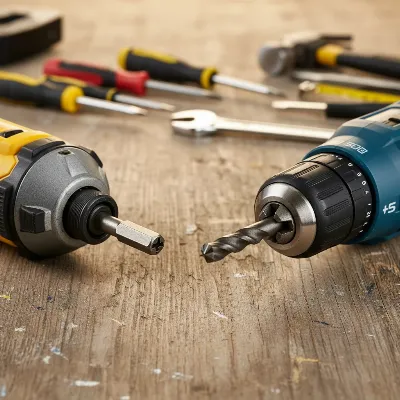 An impact driver with a hex-shank drill bit next to a traditional drill with a round-shank bit, illustrating their distinct chuck types for drilling.
How to Use and Maintain an Impact Driver Correctly
Proper usage and regular maintenance are vital for maximizing the lifespan and performance of your impact driver, especially when attempting drilling tasks.
Safety When Using an Impact Driver
- Eye Protection: Always wear safety glasses or goggles. The high torque and impacting action can cause debris or bits to shatter and fly.
- Hearing Protection: Impact drivers are notoriously loud. Use earplugs or earmuffs, especially during prolonged use. [cite: 2 search 2, 1 search 3]
- Gloves: Protect your hands from splinters and vibrations.
- Secure Workpiece: Always clamp or secure your material to prevent it from moving during drilling or driving.
- Appropriate Bits: Use only impact-rated hex-shank bits for drilling with an impact driver to avoid breakage.
How to Install and Remove Drill Bits
- Installation: Insert the 1/4-inch hex-shank drill bit directly into the impact driver’s collet. Push it in firmly until it clicks into place. A slight tug will confirm it’s seated properly.
- Removal: Pull the collet collar forward (away from the tool body) to release the bit, then simply pull the bit out.
How to Adjust Torque (and Speed)
Most impact drivers don’t have a clutch like drills. Instead, they rely on a variable-speed trigger and often have multiple speed/power modes.
- Variable Speed Trigger: Apply light pressure for slower speeds, useful for starting holes or screws precisely. Increase pressure for higher speeds and more impact.
- Speed/Power Modes: Many modern impact drivers feature electronic speed settings (e.g., low, medium, high, or specific self-tapping screw modes). Select a lower speed/power mode for drilling smaller holes or working with softer materials, and higher modes for tougher jobs. This helps to manage the power and reduce the risk of over-driving or damaging the material.
Cleaning and Maintaining Your Impact Driver
- Clean Regularly: After each use, wipe down the tool with a dry cloth to remove dust and debris. Use compressed air to clear ventilation slots and the chuck area.
- Inspect Bits: Regularly check your drill bits for dullness or damage. Replace worn bits to ensure efficient drilling and prevent strain on the tool.
- Battery Care: For cordless models, store batteries in a cool, dry place away from direct sunlight. Do not overcharge or completely drain lithium-ion batteries; aim to keep them partially charged during storage.
- Storage: Store the impact driver in its case or a clean, dry environment away from extreme temperatures and moisture.
Where to Buy an Impact Driver
Finding a reliable impact driver is easy, with numerous options available both online and in physical stores.
Reputable Power Tool Stores
Visiting dedicated power tool stores or large hardware retailers offers the advantage of speaking with knowledgeable staff. You can often try out different models, feel their ergonomics, and compare features side-by-side. Stores like Lowe’s, The Home Depot, Ace Hardware, or independent tool specialists provide a wide selection and expert advice.
Purchasing Online from E-commerce Platforms
Online retailers such as Amazon, eBay, or the direct websites of tool manufacturers (e.g., DeWalt, Milwaukee, Makita) offer convenience and often competitive pricing. You can access a vast array of models, read user reviews, and compare specifications from the comfort of your home. Always ensure you are buying from authorized sellers to guarantee product authenticity and warranty support.
Buying Guide: Expert Advice from ReviewedJobs.com
As an Admin from ReviewedJobs.com with over a decade of hands-on experience with impact drivers, my goal is to guide you to the perfect tool. Here’s my expert advice:
Identify Your Usage Needs
Before buying, realistically assess what you’ll primarily use the impact driver for. Are you mainly driving long deck screws, assembling furniture, or occasionally drilling small pilot holes?
- Heavy-Duty Fastening (Decking, Framing): Prioritize higher torque (1,800+ in-lbs) and good battery capacity (4.0Ah+).
- General DIY (Furniture Assembly, Light Repairs): A mid-range model with 1,400-1,800 in-lbs torque and 2.0-4.0Ah batteries will likely suffice.
- Occasional Drilling: Ensure the model has a variable speed trigger and consider purchasing a dedicated set of impact-rated hex-shank drill bits.
Set a Suitable Budget
Impact drivers range significantly in price. While professional-grade tools offer superior performance and durability, they might be overkill and over budget for a casual DIYer. Define your budget and then seek the best value within that range, considering both the tool’s features and the cost of compatible batteries and chargers if not included.
Thoroughly Read Specifications and User Reviews
Don’t just look at the brand name. Dive into the detailed specifications: torque, RPM, IPM, weight, and battery type. User reviews, particularly from long-term users, can provide invaluable real-world insights into a tool’s performance, durability, and any potential drawbacks not apparent from the manufacturer’s description. Pay attention to comments regarding battery life, comfort, and noise levels.
Purchase from Reputable Retailers
Whether online or in-store, always buy from established and authorized dealers. This ensures you receive a genuine product, access to customer support, and a valid manufacturer’s warranty. Counterfeit tools or those purchased from unofficial channels often lack quality control and warranty coverage.
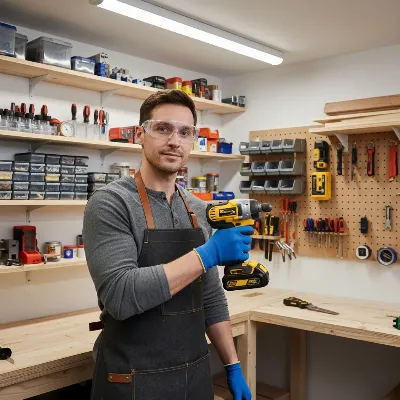 A DIY enthusiast confidently holding an impact driver in a well-organized home workshop, emphasizing ease of use.
Conclusion
The impact driver is a powerhouse tool, indispensable for driving fasteners with its high torque and efficient impacting action. While it primarily excels in this role, its versatility, especially with the right accessories, means it can indeed serve as a regular drill for many DIY tasks. However, it’s crucial to understand its limitations regarding precision, the type of materials it handles best, and the need for specialized hex-shank drill bits. A dedicated drill still offers unmatched control and a smoother finish for precise drilling. For the ultimate DIY setup, having both an impact driver and a standard drill offers the best of both worlds, ensuring you always have the perfect tool for any fastening or drilling challenge.
What’s your go-to tool for your trickiest DIY projects—the raw power of an impact driver or the precision of a drill?
Frequently Asked Questions
Can an impact driver drill through metal?
Yes, an impact driver can drill through some metals, especially softer ones like aluminum or thin steel, provided you use appropriate impact-rated hex-shank metal drill bits. However, it’s generally slower and may leave a rougher finish than a dedicated metal drill bit used with a regular drill, and might not be suitable for very hard or thick metals.
What types of drill bits can I use with an impact driver?
You must use drill bits with a 1/4-inch hex shank. These are often labeled as “impact-rated” or “impact driver bits.” Common types include hex-shank twist bits for wood and metal, spade bits, and some step bits. Avoid using standard round-shank drill bits directly in an impact driver unless you have a specific adapter chuck designed for it.
Why is an impact driver louder than a regular drill?
The primary reason an impact driver is louder is its unique “hammering” mechanism. When the tool encounters resistance, an internal hammer strikes an anvil multiple times per second to deliver bursts of rotational torque. This rapid striking action creates the characteristic loud, percussive noise.
Is an impact driver necessary for every DIYer?
While not strictly “necessary” for every single task, an impact driver significantly enhances efficiency and reduces effort for many common DIY projects, especially those involving driving long screws, assembling furniture, or working with tougher materials. If you frequently undertake such tasks, it’s a highly valuable addition to your toolkit.
Can I use an impact driver for delicate tasks like driving small screws into soft wood?
It’s generally not recommended. Impact drivers lack a clutch, which prevents over-tightening. Their high torque can easily strip small screw heads, damage soft materials, or drive screws too deep. For delicate tasks, a drill with an adjustable clutch or even a manual screwdriver offers much better control.
How to Use and Maintain an Impact Driver
Learn the proper steps for safely using, installing bits, adjusting speed, and maintaining your impact driver for optimal performance and longevity.
Always wear safety glasses or goggles to protect against flying debris. Use earplugs or earmuffs during prolonged use due to the tool's loud operation. Secure your workpiece with clamps to prevent movement and always use impact-rated hex-shank bits to avoid breakage.
To install, insert the 1/4-inch hex-shank drill bit firmly into the impact driver's collet until it clicks. Confirm it's seated by a slight tug. To remove, pull the collet collar forward, away from the tool body, and then pull the bit out.
Impact drivers typically use a variable-speed trigger; apply light pressure for slower speeds and increase for higher speeds. Many modern models also feature electronic speed/power modes (e.g., low, medium, high). Select a lower mode for delicate tasks and higher modes for tougher jobs to manage power effectively.
After each use, wipe down the tool with a dry cloth and use compressed air to clear ventilation slots and the chuck area. Regularly inspect drill bits for dullness and replace them as needed. For cordless models, store lithium-ion batteries partially charged in a cool, dry place.

This tool is a beast! I was struggling with some long lag screws for a fence project, and my old drill just couldn’t cut it. The impact driver made quick work of them. The explanation of how it delivers power in short, rapid bursts really helped me understand why it’s so effective. It’s a must-have for any serious DIYer or pro.
I picked up a new impact driver after reading about how it handles pilot holes. It’s fantastic for that, and driving screws is so much faster. My only minor gripe is that for really delicate work, like assembling some IKEA furniture, I still prefer my regular drill. The impact driver can be a bit overkill and I worry about overtightening, even with a light touch. But for most DIY, it’s my go-to.
I got an impact driver hoping it would completely replace my old drill, especially for drilling up to 1/2 inch holes. While it’s great for driving fasteners, I found that for drilling larger holes in metal, it just doesn’t have the same smooth, consistent power as my standard drill. It gets the job done eventually, but it’s a bit slower and feels less controlled. Good for screws, not so much for serious drilling.
I’ve been using my impact driver for almost everything lately, and it’s a game-changer. The bit about using impact-rated hex-shank drill bits was spot on – makes a huge difference. I used to strip screws all the time with my old drill, but this thing just powers them right in, even through tougher woods. Definitely recommend it for anyone doing a lot of deck work or framing.