Tackling home improvement projects, from assembling furniture to building decks, often requires more than just a simple drill. For tasks involving stubborn screws, long fasteners, or dense materials, a cordless impact driver becomes an indispensable tool. It delivers a powerful, rotational force combined with rapid percussive blows, making light work of jobs that would exhaust a conventional drill and your wrists. But with so many models hitting the market in 2026, choosing the right one for your home workshop can be overwhelming.
This comprehensive guide, informed by over a decade of hands-on experience in tool repair, maintenance, and usage, will help you navigate the features, compare the top contenders, and select the perfect cordless impact driver to elevate your DIY game. We’ll delve into what makes these tools tick, what to look for, and how to get the most out of your investment.
What is an Impact Driver?
An impact driver is a specialized power tool designed to drive fasteners, such as screws, nuts, and bolts, quickly and efficiently into various materials. While it might visually resemble a drill, its internal mechanism operates quite differently, making it uniquely suited for high-torque applications. Unlike a standard drill, which applies continuous rotational force, an impact driver uses a hammering action that creates short, powerful bursts of rotational impact when it encounters resistance. This percussive force helps to prevent cam-out (where the bit slips from the screw head) and significantly reduces strain on the user’s wrist. It excels at driving long or large fasteners into tough materials like hardwood or metal, tasks where a regular drill would struggle or stall.
Cordless Impact Drivers: Power and Portability
In today’s market, cordless impact drivers are the most popular choice for both DIY enthusiasts and professionals due to their unparalleled portability and convenience. These tools are powered by rechargeable lithium-ion (Li-ion) batteries, typically ranging from 12V to 24V.
- 12V Impact Drivers: These are generally more compact and lightweight, making them ideal for working in confined spaces or for lighter-duty tasks like cabinet installation or electrical work. While less powerful than their higher-voltage counterparts, modern 12V models can still pack a surprising punch for everyday home use.
- 18V/20V Impact Drivers: This is the most common and versatile category, offering an excellent balance of power, runtime, and weight. They are suitable for a vast array of home projects, from framing and decking to general repairs. Most major tool brands offer extensive ecosystems of 18V/20V tools, allowing you to share batteries and chargers across multiple devices.
- 24V Impact Drivers: Some brands offer 24V systems, which typically provide a boost in power and often longer runtime, catering to more demanding tasks that might approach professional-grade applications.
A key advancement in cordless impact drivers is the brushless motor technology. Brushless motors are more efficient, run cooler, last longer, and deliver more power and torque than older brushed motors. This translates to extended battery life and enhanced performance, making them a preferred choice for any serious DIYer.
Key Factors When Choosing an Impact Driver
Selecting the right impact driver involves understanding several critical specifications and features that directly impact performance and usability. Considering these factors will help you align the tool with your specific project needs.
Torque (Lực siết) – The Most Important Factor
Torque, measured in Inch-Pounds (in-lbs) or Newton-Meters (Nm), is the rotational force an impact driver can exert. It’s the primary indicator of how much power the tool has to drive or loosen fasteners. Higher torque values mean the driver can handle larger, longer screws and bolts, or work with denser materials more effectively. For most home use, an impact driver with 1,500 to 2,500 in-lbs of torque is generally sufficient, though more demanding projects might benefit from higher ratings. Many modern impact drivers offer multiple torque settings, allowing for greater control and preventing overtightening or stripping delicate fasteners.
No-Load Speed (RPM) and Impact Rate (IPM)
- No-Load Speed (Revolutions Per Minute – RPM): This indicates how fast the chuck spins when not under load. Higher RPM allows for quicker driving of fasteners, especially in softer materials or for smaller screws.
- Impact Rate (Impacts Per Minute – IPM): This refers to how many hammering actions the tool delivers per minute. A higher IPM rating means more frequent percussive blows, which is beneficial for driving fasteners into hard materials and helps prevent stripping.
Many impact drivers feature variable speed triggers, giving you precise control over both RPM and IPM based on the application. Some also include multiple pre-set speed modes for different tasks.
Battery Type and Runtime
Since we are focusing on cordless models, the battery is paramount. Most modern cordless impact drivers use Lithium-Ion (Li-ion) batteries, known for their high energy density, longer life cycle, and lack of memory effect.
- Voltage (V): As discussed, 12V, 18V, and 20V (often interchangeable with 18V in many brands) are common. Higher voltage generally equates to more power.
- Amp-Hours (Ah): This measures the battery’s capacity and directly relates to its runtime. A 4.0 Ah battery will run twice as long as a 2.0 Ah battery of the same voltage. For extended projects, higher Ah batteries are beneficial, though they add weight and bulk.
- Battery System Compatibility: If you already own cordless tools from a particular brand (e.g., DeWalt, Milwaukee, Makita, Ryobi), choosing an impact driver from the same brand allows you to share batteries and chargers, saving money and reducing clutter.
Size and Weight
For home use, especially when working overhead, in tight spaces, or for extended periods, the tool’s size and weight are crucial ergonomic factors. A compact and lightweight impact driver reduces fatigue and improves maneuverability. Many manufacturers offer “compact” or “sub-compact” versions that sacrifice a little power for a significant reduction in size and weight, making them excellent choices for most DIY tasks. Consider the tool’s length (nose to tail) and its weight, particularly with a battery installed.
Brand and Price
Reputable brands like Milwaukee, DeWalt, Makita, Ryobi, and Kobalt consistently produce high-quality impact drivers with strong performance and reliable warranties. While premium brands often come with a higher price tag, they usually offer superior build quality, more advanced features, and extensive battery platforms. However, many mid-range brands provide excellent value for money, making powerful and reliable tools accessible to the average homeowner. Always compare features against price and consider your budget.
Ergonomics and Additional Features
A comfortable grip and good balance can significantly reduce user fatigue during long projects. Look for rubberized grips and a tool that feels balanced in your hand.
Additional features that enhance usability include:
- Built-in LED work lights: Illuminate your workspace.
- Belt clip: Convenient for carrying the tool when not in use.
- Quick-change chuck: Allows for one-handed bit changes.
- Multiple speed/mode settings: Provide greater control for different applications.
> “Choosing the right impact driver is about more than just raw power; it’s about finding the balance between torque, size, and battery life that best fits your typical projects. Don’t underestimate the value of a comfortable grip and adjustable settings for precision work.” – John Davis, ReviewedJobs.com Expert Technician
Comparison Table: Top 5 Best Cordless Impact Drivers for Home Use in 2026
To help you make an informed decision, here’s a detailed comparison of five top-rated cordless impact drivers that are excellent choices for home use in 2026. This table highlights their key specifications, advantages, and potential drawbacks.
| Product Name | Torque (in-lbs) | No-Load Speed (RPM) | Impact Rate (IPM) | Battery Voltage | Key Advantages | Key Disadvantages | Price (Approx.) |
|---|---|---|---|---|---|---|---|
| Milwaukee M18 Fuel (2953-20) | 2,000 | 3,900 | 4,400 | 18V | Exceptional power-to-weight ratio, extensive M18 battery system, advanced speed modes for precision. | Higher price point, bare tool often sold without battery/charger. | $149 (bare tool) |
| DeWalt ATOMIC 20V MAX (DCF850) | 1,825 | 3,250 | 3,800 | 20V MAX | Incredibly compact and lightweight, powerful for its size, part of the widely available 20V MAX system. | Slightly less torque than full-size 18V pro models. | $129 (bare tool) |
| Makita 18V LXT Quick-Shift (XDT14T) | 1,550 | 3,600 | 3,800 | 18V | Quick-Shift Mode for reduced cam-out and stripped screws, excellent ergonomics, robust build quality. | Lower torque than some competitors, can be pricier. | $179 (bare tool) |
| Ryobi ONE+ HP Brushless (PBLID04) | 2,300 | 3,400 | 4,200 | 18V | Best value for performance, impressive torque for the price, compatible with the vast ONE+ system. | May lack some premium features/modes of higher-end brands. | $129 (bare tool) |
| Kobalt 24V XTR Max (KID 2024A-03) | 2,400 | 3,200 | 4,200 | 24V | High torque for demanding tasks, good battery efficiency, competitive price for its power level. | Kobalt’s 24V system is less extensive than DeWalt/Milwaukee’s. | $159 (kit) |
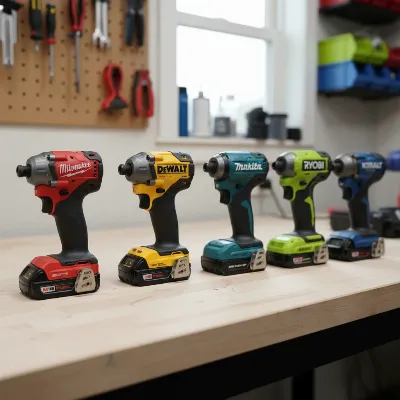 A selection of the best cordless impact drivers for home use lined up on a workbench.
How to Use and Maintain Your Impact Driver Correctly
Proper usage and maintenance are essential for ensuring both your safety and the longevity of your impact driver. Following these guidelines will help you maximize the performance and lifespan of your tool.
Safety First
- Eye Protection: Always wear safety glasses to protect against flying debris.
- Hand Protection: Gloves can improve grip and protect your hands.
- Secure Workpiece: Ensure your material is clamped or held securely to prevent it from moving during driving.
- Proper Grip: Hold the tool firmly with both hands if necessary, especially for high-torque applications, to maintain control.
- Clear Work Area: Keep your workspace free of clutter to avoid accidents.
Bit Installation and Removal
Impact drivers use a 1/4-inch hex chuck, which is different from the round chucks on drills.
- Installation: Pull the collar of the chuck forward, insert the hex shank of the bit firmly, and then release the collar. The bit should lock securely into place.
- Removal: Pull the collar forward again, and the bit will release. Always ensure the tool is off and the battery is removed when changing bits for added safety.
Adjusting Force and Speed
Most impact drivers come with a variable speed trigger, allowing you to control the RPM and IPM based on the pressure you apply.
- Light Pressure: For delicate tasks or starting a screw slowly.
- Full Pressure: For maximum power and speed, ideal for driving long fasteners into tough materials.
Many advanced models also include multiple speed settings or drive modes, which can be selected via a button or switch. These modes optimize the tool’s performance for specific applications, such as self-tapping screws or precision work, preventing overtightening.
Cleaning and Storage
- Regular Cleaning: After each use, wipe down the tool with a dry cloth to remove dust, debris, and sawdust. Use compressed air to clear vents and the chuck area.
- Battery Care: Store Li-ion batteries in a cool, dry place. Avoid extreme temperatures. Do not fully discharge batteries before recharging; partial charges are fine. For long-term storage, aim for a 50-70% charge.
- Tool Storage: Store your impact driver in its case or a designated storage area to protect it from dust and physical damage. Keep it away from moisture.
Where to Buy an Impact Driver Reliably?
Investing in a quality impact driver means choosing a reputable vendor that offers genuine products and reliable customer support.
Local Tool Stores and Hardware Chains
Physical stores like Home Depot, Lowe’s, Ace Hardware, or specialized tool shops allow you to:
- Handle the Tool: Get a feel for the ergonomics, weight, and balance.
- Ask Questions: Speak with knowledgeable staff who can offer advice and recommendations.
- Immediate Purchase: Take your new tool home right away.
- Easier Returns/Exchanges: Often a simpler process for warranty claims or returns.
Online Retailers
Major online platforms such as Amazon, Walmart, and the official websites of manufacturers (e.g., DeWalt, Milwaukee, Makita) offer:
- Wider Selection: Access to a broader range of models and brands than a local store might carry.
- Competitive Pricing: Often have sales and discounts.
- User Reviews: A wealth of customer feedback can help inform your decision.
When buying online, always verify the seller’s reputation, check their return policy, and ensure the product comes with the manufacturer’s full warranty. Be wary of deals that seem too good to be true, as counterfeits or grey-market tools can be an issue.
Buying Guide: Expert Advice from ReviewedJobs.com
As a technician with over a decade of experience with impact drivers, my goal is to help you make an informed choice that you won’t regret. Here’s my expert advice:
1. Determine Your Primary Needs
Before looking at specific models, clearly define how you intend to use the impact driver.
- Light-duty DIY: Occasional furniture assembly, hanging pictures, small repairs? A compact 12V or an entry-level 18V model might be perfect.
- Medium-duty projects: Deck building, fencing, general carpentry, working with hardwoods? An 18V/20V model with good torque and battery life will be your best friend.
- Heavy-duty applications: Large construction, lag bolts, dense materials frequently? Consider a more powerful 18V/20V brushless model with higher torque specs.
2. Set a Realistic Budget
Impact drivers vary widely in price. While it’s tempting to go for the cheapest option, remember that quality often correlates with performance and durability. A good impact driver is an investment.
- Entry-level kits (tool, battery, charger): Can start from $100-$150.
- Mid-range kits: Typically $150-$250, offering a great balance of features and performance.
- Professional-grade kits: Can exceed $250, providing top-tier power and advanced features.
Factor in the cost of batteries and chargers if you’re not buying a kit or already have a compatible battery system.
3. Read Technical Specifications and User Reviews Carefully
Don’t just rely on marketing claims. Dive into the specs:
- Torque (in-lbs): Directly impacts power.
- RPM and IPM: Affect speed and efficiency.
- Battery Ah: Determines runtime.
Cross-reference these with genuine user reviews. Pay attention to comments about ergonomics, reliability, customer service, and how the tool performs in real-world scenarios similar to yours. Look for patterns in feedback, both positive and negative.
4. Prioritize Battery System Compatibility
If you already own cordless power tools from a specific brand (e.g., DeWalt, Milwaukee, Makita), strongly consider buying an impact driver from the same brand. This allows you to interchange batteries and chargers, saving money and streamlining your tool collection. Brand loyalty isn’t just about preference; it’s about ecosystem efficiency.
5. Purchase from Reputable Sellers with Good Warranty
Always buy from authorized dealers or well-known retailers to ensure you receive a genuine product with a valid manufacturer’s warranty. A solid warranty (often 3-5 years for major brands) provides peace of mind and protects your investment against defects. Understand the return and repair processes before you buy.
Conclusion
Choosing the best cordless impact driver for your home projects in 2026 is a critical decision that can significantly enhance your efficiency and enjoyment in the workshop. We’ve explored the core mechanics of these powerful tools, identified key features like torque, speed, and battery life, and highlighted five top contenders from leading brands. By carefully assessing your needs, understanding specifications, and leveraging expert advice, you’re now equipped to select an impact driver that not only meets but exceeds your expectations.
An impact driver is more than just a tool; it’s a partner in your DIY endeavors, helping you conquer tough tasks with ease. What project will you tackle first with your new impact driver?
Frequently Asked Questions
What is the primary difference between an impact driver and a drill?
An impact driver is designed specifically for driving fasteners (screws, bolts) into materials with high torque and a percussive hammering action, preventing cam-out. A standard drill is primarily for drilling holes, offering continuous rotational force with less torque, though some can drive screws.
Can I use an impact driver for drilling holes?
While some impact drivers can technically drill small holes in softer materials with specialized hex-shank drill bits, it’s not their primary purpose. Their percussive action is less efficient for drilling and can wear out bits faster. For optimal drilling performance, a dedicated drill or hammer drill is recommended.
What voltage is best for home use impact drivers?
For most home users, an 18V or 20V MAX cordless impact driver offers the best balance of power, versatility, and runtime for a wide range of DIY projects. 12V models are great for lighter tasks and confined spaces, while 24V options provide extra power for more demanding jobs.
What kind of bits do impact drivers use?
Impact drivers exclusively use 1/4-inch hex shank bits. These bits are specifically designed to withstand the high torque and percussive forces generated by an impact driver, preventing breakage and ensuring a secure fit in the chuck.
How do I know how much torque I need for my projects?
For light-duty home tasks like assembling furniture or driving small screws, 1,000-1,500 in-lbs is often sufficient. For general home improvement, decking, or driving larger fasteners into wood, 1,500-2,000 in-lbs is a good range. For heavy-duty projects, consider 2,000 in-lbs or higher.
Should I choose a brushed or brushless impact driver?
Always choose a brushless impact driver if your budget allows. Brushless motors are more efficient, delivering more power and torque while running cooler and lasting longer than brushed motors. This translates to better performance and extended battery life for your tool.
