For professionals and serious DIYers alike, a powerful impact driver is indispensable when tackling projects that involve heavy-duty fasteners like long lag screws. These robust screws, often vital for structural integrity in decking, framing, and timber construction, demand a tool that can deliver sustained, high-torque performance without faltering. While a standard drill might struggle, an impact driver is engineered precisely for this challenge, transforming arduous tasks into efficient, manageable jobs.
At ReviewedJobs.com, with over a decade of hands-on experience repairing, maintaining, and utilizing a wide array of impact drivers, we understand the nuances that separate good tools from great ones. From deciphering technical specifications to assessing real-world performance and the latest technological advancements, our goal is to cut through the noise and provide clear, actionable insights. This comprehensive guide will navigate the world of impact drivers, highlighting the critical features for driving long lag screws and recommending our top picks to help you find the optimal solution for your most demanding work.
What is an Impact Driver?
An impact driver is a specialized power tool designed to efficiently drive or remove fasteners, particularly long screws, lag bolts, and other high-torque applications. Unlike a standard drill, which delivers continuous rotational force, an impact driver utilizes a unique internal hammering mechanism that engages when the tool senses resistance. This mechanism converts rotational energy into powerful, rapid, percussive blows, dramatically increasing the turning force, or torque, applied to the fastener.
This distinct action allows impact drivers to sink large fasteners into dense materials like hardwood, treated lumber, or metal with significantly less effort and user fatigue compared to a drill. The intermittent impacts prevent “cam-out” (where the bit slips out of the screw head) and minimize wrist strain, making them incredibly effective for repetitive, heavy-duty tasks. While they may resemble drills, impact drivers are primarily fastening tools, excelling at jobs where high torque is paramount, rather than precise drilling of holes.
Types of Impact Drivers
Impact drivers come in various forms, primarily differentiated by their power source and motor technology. Understanding these types is crucial for selecting the right tool for your specific needs, especially when dealing with demanding tasks like driving long lag screws.
Cordless Impact Drivers (Battery-Powered)
Cordless impact drivers are by far the most popular type today, offering unparalleled portability and convenience. Powered by rechargeable lithium-ion battery packs, these tools free users from the constraints of power cords, allowing work in remote locations or tight spaces without access to electrical outlets.
Within the cordless category, a significant distinction lies between brushed and brushless motors:
- Brushed Motors: These are traditional motors that use carbon brushes to transfer electrical current to the motor’s commutator. They are generally less expensive to manufacture, making tools with brushed motors more budget-friendly. However, the friction from the brushes creates heat, reduces efficiency, and causes the brushes to wear out over time, leading to a shorter tool lifespan and less consistent power delivery.
- Brushless Motors: Representing a more advanced technology, brushless motors use electronic circuitry and magnets to generate power, eliminating the physical brushes. This results in significantly less friction and heat build-up, leading to higher efficiency, more power output, and a much longer tool lifespan. Brushless impact drivers offer extended battery run time, more precise control, and often a more compact and lighter design, making them the preferred choice for heavy-duty, professional applications like driving long lag screws.
Pneumatic Impact Drivers
Pneumatic impact drivers, often referred to as air impact drivers, are powered by compressed air from an air compressor. These tools are common in automotive repair and industrial settings due where high power output and durability are often required. They can deliver substantial torque, sometimes exceeding what electric models offer, and are known for their robustness and longevity due to fewer moving parts.
However, pneumatic impact drivers come with their own set of considerations. They require a constant connection to an air compressor and hose, which significantly limits their portability and can be cumbersome on a job site. They are also typically heavier and noisier than their cordless electric counterparts. While capable of driving large fasteners, for most construction and woodworking applications involving screws, especially long lag screws, the convenience and modern performance of cordless electric models often outweigh the benefits of pneumatic options.
Comparing Cordless and Pneumatic Impact Drivers
| Feature | Cordless Electric Impact Drivers | Pneumatic Impact Drivers |
|---|---|---|
| Power Source | Rechargeable Lithium-ion battery packs | Compressed air from an air compressor |
| Portability | Excellent; no cords or hoses, ideal for mobile use and tight spaces | Limited; requires air compressor and hose connection |
| Torque Output | High (typically 1,500 – 2,500+ in-lbs), very capable for lag screws | Very high (often exceeding electric), durable for extreme tasks |
| Efficiency | High (especially brushless), longer run times | Good, consistent power as long as air supply is maintained |
| Maintenance | Battery charging, occasional cleaning | Air compressor maintenance, hose checks, tool lubrication |
| Noise & Vibration | Generally lower (especially hydraulic assist models) | Often louder and with more vibration |
| Cost | Initial tool and battery investment; ongoing battery replacement | Tool cost plus significant investment in a quality air compressor |
| Typical Use | Construction, woodworking, DIY, general fastening for screws/bolts | Automotive, heavy industrial, high-volume assembly with bolts |
> “For tasks demanding raw power, particularly in a fixed workshop, pneumatic tools shine. But for job site versatility and ergonomic comfort when driving countless lag screws, modern cordless electric impact drivers are simply unmatched.” – Sarah Chen, Lead Tool Analyst at ReviewedJobs.com
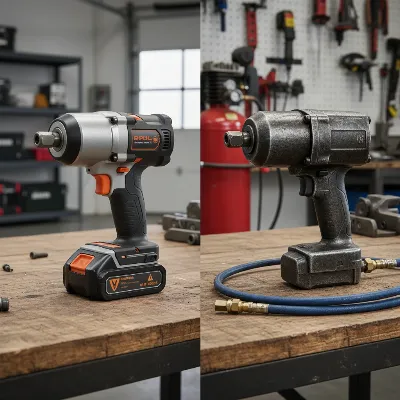 Comparison between cordless electric and pneumatic impact drivers on a workbench
Factors to Consider When Choosing an Impact Driver
Selecting the right impact driver for driving long lag screws requires careful consideration of several key specifications and features. These elements directly influence the tool’s performance, durability, and user experience for heavy-duty fastening tasks.
Torque (Lực siết) – The Most Important Factor
Torque is arguably the most crucial specification when choosing an impact driver for long lag screws. Measured in inch-pounds (in-lbs) or Newton-meters (Nm), torque indicates the rotational force the tool can apply. For driving substantial fasteners like lag screws, you need an impact driver with ample torque to overcome resistance without stalling or excessive straining.
- General Needs: For light assembly or cabinetry, 800-1,200 in-lbs might suffice.
- Decking and Framing: Tasks involving standard deck screws or general construction usually require 1,500-1,800 in-lbs.
- Long Lag Screws and Structural Fasteners: To efficiently drive larger lag screws (e.g., 3-inch or longer) into dense materials, aim for impact drivers with 1,800-2,000 in-lbs of torque or higher.
However, more torque isn’t always better; excessive force can lead to stripped screw heads, broken fasteners, or damage to the workpiece. Look for models with multiple speed/torque settings or an “assist” mode to provide better control.
No-load Speed (Tốc độ không tải) and Impact Rate (Tốc độ đập)
- No-load Speed (RPM – Revolutions Per Minute): This refers to how fast the bit spins when not under load. Higher RPM generally means faster driving, but for heavy-duty tasks, sustained torque is more important than raw speed. A good range for driving lag screws is typically 0-3,000 RPM, with variable speed triggers offering precise control.
- Impact Rate (IPM – Impacts Per Minute): This measures how many hammering blows the tool delivers per minute. A higher IPM (e.g., 3,000-4,000+ IPM) translates to more rapid, powerful impacts, which is excellent for quickly sinking tough fasteners into resistant materials. Combined with high torque, a high impact rate makes quick work of stubborn lag screws.
Battery Type and Life (For Cordless Machines)
For cordless impact drivers, the battery system is paramount.
- Voltage (V): Most powerful impact drivers are 18V or 20V Max (which is essentially the same as 18V under load). These higher voltage systems deliver the power needed for demanding tasks. 12V models are more compact and lighter, suitable for lighter-duty tasks, but generally lack the grunt for long lag screws.
- Amp-hours (Ah): This determines the battery’s capacity and thus the tool’s run time. For heavy use with lag screws, batteries with 4.0Ah, 5.0Ah, or even higher are recommended to ensure sustained operation without frequent recharging. Consider the brand’s battery platform – if you already own tools from a specific brand, sticking to that platform can save money and simplify battery management.
Size and Weight of the Machine
Ergonomics play a significant role, especially during prolonged use.
- Weight: Lighter tools (under 3.5 lbs bare tool) reduce user fatigue, particularly when working overhead or in awkward positions.
- Size (Head Length): A more compact head length allows the tool to fit into tighter spaces, which is often a necessity in construction. While powerful impact drivers tend to be slightly larger, many manufacturers have achieved impressive power-to-size ratios with brushless technology.
Brand and Price
Reputable brands like Milwaukee, Makita, DeWalt, Flex, and Kobalt are known for their quality, performance, and extensive battery ecosystems. While premium brands often come with a higher price tag, they typically offer superior power, durability, advanced features, and better warranty support.
- Price Range: Expect to invest anywhere from $150-$400+ for a bare tool (without battery/charger) from a top-tier brand, and more for kits. Consider your budget against your usage frequency and specific project demands. For occasional use, a mid-range option might suffice, but for professional, daily use, investing in a high-end tool will pay off in performance and longevity.
Bảng so sánh các mẫu Impact Driver tốt nhất hiện nay
Based on extensive testing and reviews from leading industry experts, here is a comparison of some of the best impact drivers currently available that excel at driving long lag screws.
| Product Name | Torque (in-lbs) | No-load Speed (RPM) | Impact Rate (IPM) | Battery Type | Price (Approx.)* | Pros | Cons |
|---|---|---|---|---|---|---|---|
| Milwaukee M18 Fuel 2953-20 | 2,000 | 3,900 | 4,400 | 18V Li-ion | $200 (bare tool) | Exceptional power, fast driving, compact for its class, excellent control with multiple modes. | Premium price, batteries sold separately. |
| Makita 18V LXT XDT14T | 1,600 | 3,600 | 3,800 | 18V Li-ion | $180 (bare tool) | Excellent balance of power and control, Quick-Shift mode, lightweight, comfortable grip. | Slightly less torque than top competitors, higher price for the kit. |
| DeWalt 20V MAX XR DCF887B | 1,825 | 3,250 | 3,600 | 20V Max Li-ion | $170 (bare tool) | Very powerful and efficient, 3-speed settings, compact design, reliable DeWalt ecosystem. | Can be loud, not always the most compact in its class. |
| Kobalt XTR Max 24V | 2,400 | 3,800 | 4,200 | 24V Li-ion | $170 (bare tool) | Undisputed champion in lag bolt tests, extremely high torque, excellent battery efficiency, Assist mode. | Kobalt ecosystem not as widespread as others, slightly heavier. |
| Flex 24V Quick Eject FX1371A | 2,500 | 4,000 | 4,200 | 24V Li-ion | $200 (bare tool) | Class-leading torque and speed, excellent performance in heavy-duty applications, Quick Eject chuck. | Newer brand, smaller battery ecosystem, can be bulkier. |
*Prices are approximate and subject to change; bare tools typically do not include battery and charger.
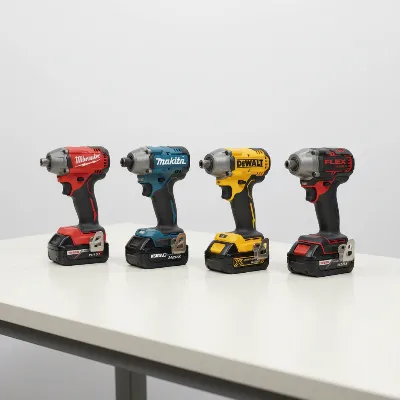 Five top impact driver models arranged on a clean backdrop, highlighting their features
Hướng dẫn sử dụng và bảo dưỡng Impact Driver đúng cách
Mastering your impact driver involves more than just pulling the trigger; it requires understanding proper usage, safety protocols, and routine maintenance. This ensures not only the longevity of your tool but also the safety and quality of your work, especially when dealing with demanding fasteners like long lag screws.
An toàn lao động khi sử dụng Impact Driver
Safety should always be your top priority when operating any power tool. Impact drivers, with their high torque and percussive action, demand respect.
- Wear Personal Protective Equipment (PPE): Always wear safety glasses to protect against flying debris and ear protection due to the tool’s loud, impacting noise. Gloves can also improve grip and reduce vibration.
- Secure Your Workpiece: Ensure the material you’re working on is stable and clamped down if necessary. This prevents movement and potential injury.
- Use the Right Bit: Always use impact-rated bits. Standard screwdriver bits are not designed to withstand the high torque and impacts and can shatter or strip, posing a safety risk.
- Maintain a Firm Grip: Hold the impact driver firmly with both hands if comfortable, especially when driving large fasteners, to counteract the tool’s rotational force.
- Be Aware of Kickback: While impact drivers minimize wrist twist compared to drills, be prepared for some rotational force, particularly when the fastener binds or fully seats.
- Clear Your Work Area: Remove any loose items, cords, or obstructions that could interfere with your work or become a hazard.
Cách lắp và tháo mũi vít
Impact drivers typically feature a 1/4-inch hex chuck that makes bit changes quick and effortless.
- Installing a Bit: Pull the collar of the chuck forward, insert the hex shank of the impact-rated bit all the way into the chuck, and then release the collar. The bit should click securely into place. Give it a gentle tug to confirm it’s locked.
- Removing a Bit: Simply pull the collar forward again, and the bit will release.
Cách điều chỉnh lực siết
Many modern impact drivers offer multiple speed or torque settings, which can be crucial for versatility and preventing damage.
- Mode Selector: Look for a button or switch, often near the base of the handle or on the tool’s dashboard, that allows you to cycle through different power modes (e.g., 1, 2, 3, or specific modes like “self-tapping screw mode”). Lower settings reduce torque and speed, ideal for smaller screws or delicate materials, while higher settings unleash full power for lag screws.
- Variable Speed Trigger: The trigger itself provides fine control. A light squeeze delivers slower speed and fewer impacts, while pressing it fully will unleash maximum power. Practice with scrap material to get a feel for the different settings and trigger responsiveness.
- “Assist” Modes: Some high-end impact drivers include an “assist” mode designed to start fasteners slowly, preventing cross-threading, and then gradually increase speed and torque as needed.
Vệ sinh và bảo quản Impact Driver
Proper care extends the life of your tool and maintains its performance.
- Cleaning: After each use, wipe down the tool with a dry or slightly damp cloth to remove dust, dirt, and debris. Pay attention to the ventilation slots to ensure they remain clear, preventing overheating. Avoid using harsh chemicals or solvents.
- Battery Care: Store batteries in a cool, dry place, away from direct sunlight and extreme temperatures. Do not store fully discharged batteries for extended periods; recharge them to a partial level (around 50-70%) for optimal long-term storage.
- Tool Storage: Store your impact driver in its case or a designated tool bag/cabinet in a dry environment. Protect it from moisture, extreme temperatures, and accidental drops.
- Inspect Regularly: Periodically check the chuck for any play or damage, inspect the power cord (if applicable) for wear, and ensure all screws are tight. Address any issues promptly.
Mua Impact Driver ở đâu uy tín?
Finding a reputable seller is just as important as choosing the right impact driver. Purchasing from trusted sources ensures you receive genuine products, valid warranties, and reliable customer support.
Các cửa hàng dụng cụ điện uy tín (Reputable Tool Stores)
Specialized hardware and tool stores are excellent places to purchase impact drivers. They often have knowledgeable staff who can provide expert advice, allow you to physically handle and compare different models, and offer immediate assistance with any issues.
- National Chains: Large retailers like The Home Depot, Lowe’s, or Ace Hardware in the US, or their equivalents in other regions, carry a wide selection of major brands.
- Local Tool Shops: Smaller, independent tool shops often provide personalized service and can be a great resource for expert recommendations and accessory selection.
- Industrial Suppliers: For professional-grade tools, industrial supply companies (online or physical locations) often stock the highest-performing models and can cater to bulk orders or specialized needs.
Mua online trên các sàn thương mại điện tử (Online Marketplaces)
Online retailers offer convenience, competitive pricing, and a vast selection. However, it’s crucial to buy from reputable sellers within these platforms.
- Manufacturer Websites: Purchasing directly from the brand’s official website (e.g., MilwaukeeTool.com, MakitaTools.com, DeWalt.com) guarantees authenticity and full warranty support.
- Authorized Online Retailers: Major online platforms like Amazon, eBay, or Walmart.com often have authorized dealers for tool brands. Always check the seller’s rating, reviews, and ensure they are listed as an authorized reseller to avoid counterfeits or voided warranties.
- Specialized Online Tool Stores: Websites dedicated solely to selling tools can also be a great resource, offering expert reviews, comparisons, and often exclusive deals.
When buying online, always verify the seller’s legitimacy, review their return policy, and confirm that the product comes with the manufacturer’s full warranty.
Buying Guide: Lời khuyên từ chuyên gia ReviewedJobs.com
As an Admin of ReviewedJobs.com with over a decade in the impact driver field, my goal is to empower you with the knowledge to make an informed decision. Choosing the right impact driver, especially for demanding tasks like driving long lag screws, isn’t just about raw power; it’s about matching the tool to your specific needs and ensuring a smart investment.
Xác định nhu cầu sử dụng của bạn (Define Your Usage Needs)
Before you even start looking at models, take a moment to honestly assess your primary use case.
- How often will you use it? Daily professional use requires a more durable, powerful, and feature-rich tool than occasional DIY projects.
- What size and type of lag screws will you primarily drive? Longer, thicker lag screws into dense hardwoods demand higher torque (1,800-2,000+ in-lbs) and a robust 18V/20V Max brushless system with high Amp-hour batteries. Smaller lag screws or those into softer woods might tolerate slightly less power.
- What is your existing tool ecosystem? If you already own batteries and chargers from a particular brand (e.g., Milwaukee M18, DeWalt 20V MAX), prioritizing a bare tool from the same brand can save you significant money and streamline your battery management.
Đặt ngân sách phù hợp (Set a Suitable Budget)
Impact drivers vary widely in price. While it’s tempting to go for the cheapest option, remember that for driving long lag screws, performance directly correlates with the tool’s quality and features.
- Entry-level (for light use/occasional lag screws): $100-$150 (often brushed motors or less powerful 12V systems).
- Mid-range (for serious DIY/light professional use): $150-$250 (usually brushless 18V/20V Max bare tools or basic kits). This is often the sweet spot for many users.
- High-end (for heavy professional use): $250-$400+ (premium brushless 18V/20V Max or 24V systems, often with advanced modes and higher torque).
Consider the long-term value. A more expensive, high-quality tool will likely last longer, perform better, and reduce frustration, ultimately saving you money and time.
Đọc kỹ thông số kỹ thuật và đánh giá của người dùng (Read Specifications and User Reviews)
Don’t just rely on marketing claims. Dive into the details:
- Torque (in-lbs): This is your primary indicator for lag screw performance.
- IPM (Impacts Per Minute): Higher IPM means faster driving under load.
- Motor Type: Always prioritize brushless for demanding tasks and longevity.
- Battery Capacity (Ah): For prolonged use, aim for 4.0Ah or higher batteries.
- Read Reviews: Look for reviews from users who perform similar tasks to yours. Pay attention to comments about the tool’s performance with lag screws, battery life under load, ergonomics, and overall durability. Websites like ReviewedJobs.com, TechGearLab, HGTV, and Pro Tool Reviews offer in-depth, unbiased comparisons.
Chọn mua tại các cửa hàng uy tín (Buy from Reputable Retailers)
This cannot be stressed enough. Purchasing from authorized dealers, whether online or in brick-and-mortar stores, ensures you:
- Receive a genuine product, not a counterfeit.
- Get the full manufacturer’s warranty, which is crucial for power tools.
- Have access to reliable customer service for any potential issues or repairs.
Avoid unofficial sellers on marketplaces that offer suspiciously low prices, as these often come with risks to product authenticity and warranty.
Conclusion
Choosing the right impact driver is a pivotal decision for anyone regularly tackling projects involving long lag screws. By understanding the core mechanics, prioritizing high torque and brushless motor technology, and considering battery capacity and ergonomics, you can select a tool that not only meets but exceeds your expectations. Our top picks, including the Milwaukee M18 Fuel 2953-20, Makita 18V LXT XDT14T, DeWalt 20V MAX XR DCF887B, Kobalt XTR Max 24V, and Flex 24V Quick Eject FX1371A, represent the pinnacle of performance and reliability for these demanding tasks.
Remember, a high-quality impact driver is an investment that pays dividends in efficiency, safety, and project quality. Don’t underestimate the impact of a well-chosen tool on your productivity and satisfaction. What specific project are you planning that calls for the power of an impact driver?
Frequently Asked Questions
What makes an impact driver better than a drill for lag screws?
Impact drivers deliver rapid, high-torque impacts that drills cannot match, making them superior for driving long lag screws into dense materials. This percussive action prevents cam-out, reduces wrist strain, and drives fasteners much faster and more efficiently than a standard drill.
Is a brushless motor really necessary for driving lag screws?
Yes, a brushless motor is highly recommended for driving lag screws. Brushless technology offers significantly more power, greater efficiency, longer battery run time, and extended tool life compared to brushed motors, which are all crucial benefits for handling demanding tasks involving large fasteners.
How much torque do I need for 6-inch lag screws?
For 6-inch lag screws, especially into hardwoods, you should aim for an impact driver with at least 1,800 to 2,000 inch-pounds (in-lbs) of torque, and ideally more. Ensure you also use appropriately sized pilot holes to ease driving and prevent wood splitting or screw breakage.
Can I use a 12V impact driver for long lag screws?
While a 12V impact driver is excellent for lighter tasks and smaller fasteners due to its compact size, it generally does not possess the sustained power and high torque (typically 800-1,200 in-lbs) required to efficiently drive long or large lag screws into dense materials without straining the tool or battery.
Do I need an impact wrench instead of an impact driver for lag screws?
For most lag screws, an impact driver is the appropriate tool due to its compact size and specific design for screws. Impact wrenches deliver even higher torque and are primarily designed for large nuts and bolts. While an impact wrench could drive a large lag screw, it’s often overkill, less controllable, and heavier than necessary for the task.
