Working in confined areas presents unique challenges, often demanding tools that are both powerful and exceptionally maneuverable. If you’ve ever struggled to fasten a screw in a cramped cabinet, under a vehicle’s dashboard, or deep within an engine bay, you understand the frustration a bulky tool can bring. This is precisely where 12V compact impact drivers shine, offering a perfect blend of power, precision, and a footprint small enough to access those seemingly impossible-to-reach spots. These indispensable tools are engineered to tackle common fastening tasks in tight quarters with remarkable efficiency, making them a favorite among professionals and DIY enthusiasts alike who value portability and precision.
What is an Impact Driver?
An impact driver is a specialized power tool designed to drive screws and other fasteners with high rotational force (torque) and rapid percussive impacts. Unlike a standard drill, which applies continuous rotational force, an impact driver delivers quick, strong bursts of force in a hammering motion, combined with rotation. This unique action makes it far more efficient for driving long or large fasteners, particularly into dense materials, by overcoming resistance more effectively. Its primary function is fastening, making it ideal for tasks where high torque is needed without stripping screw heads or fatiguing the user’s wrist.
The Advantage of 12V Compact Impact Drivers
When it comes to navigating the intricacies of tight spaces, 12V compact impact drivers offer distinct advantages over their more powerful, larger counterparts. Their design prioritizes a lean profile and lighter weight, transforming difficult fastening jobs into manageable tasks. For see our cordless impact recommendations on this site.
Size and Weight: The Ultimate Space Savers
The most significant benefit of a 12V compact impact driver is its diminutive size and reduced weight. These tools often boast head lengths under 5 inches and weigh less than 3 pounds, even with the battery attached. This compact form factor allows users to easily maneuver the tool into constricted areas, overhead, or at awkward angles where a larger, heavier 18V or 20V impact driver would simply not fit or would cause rapid fatigue. The absence of a large, bulky battery pack often seen on higher-voltage tools further contributes to a more ergonomic and balanced feel, enabling comfortable, extended use in challenging positions.
Power and Performance for Confined Tasks
Despite their smaller stature, modern 12V impact drivers are remarkably powerful. Thanks to advancements in brushless motor technology and lithium-ion batteries, many 12V models can deliver over 1,500 inch-pounds of torque. This level of power is more than sufficient for a wide range of common applications, including driving cabinet screws, assembling furniture, light automotive repairs, and fastening into various wood types. While they may not rival the raw, sustained power of top-tier 18V models for heavy-duty construction tasks, for precision work and repeated fastening in tight spots, their power-to-size ratio is unparalleled.
12V vs. 18V: Making the Right Choice for Your Workflow
The choice between a 12V and an 18V impact driver hinges on your primary application. For heavy-duty framing, driving large lag bolts, or dismantling stubborn automotive components, an 18V model with its higher torque and longer runtime is generally preferred. However, for users whose work frequently involves tight spaces, overhead tasks, or delicate fastening where control and maneuverability are paramount, a 12V impact driver is often the superior choice. Its lighter weight significantly reduces arm fatigue during prolonged use, and its quieter operation can be an added benefit in noise-sensitive environments. While 18V batteries offer greater capacity, the lighter 12V batteries are perfectly suited to the smaller tool and its intended applications, ensuring the overall compact design is maintained.
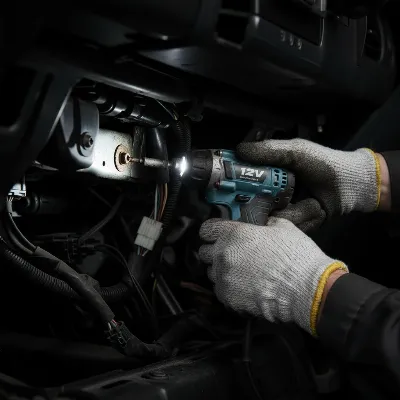 A 12V compact impact driver used by a technician in a very tight, dimly lit space, like under a car's dashboard or inside a small cabinet. The tool's small size and LED light are highlighted, showing ease of use in confined areas. Realistic, focused on the tool and hands.
Key Factors to Consider When Choosing a 12V Compact Impact Driver
Selecting the right 12V compact impact driver involves evaluating several critical features to ensure it meets your specific project demands and enhances your workflow.
Torque and Impact Rate: Balancing Power and Control
- Torque: Measured in inch-pounds (in-lbs) or Newton-meters (Nm), torque indicates the rotational force an impact driver can deliver. For a 12V compact model, a torque rating around 124 Nm (approximately 1,100 in-lbs) to over 1,500 in-lbs is considered excellent for most applications. Look for models with adjustable torque settings or multiple speed modes, which allow you to tailor the power output to the task at hand, preventing overtightening or damaging delicate materials.
- Impact Rate (IPM): Impacts Per Minute (IPM) refers to how many times the tool’s internal hammer mechanism strikes the anvil per minute. A higher IPM generally translates to faster driving, especially in tougher materials. Combined with sufficient torque, a high impact rate ensures efficient fastening.
Head Length and Ergonomics: Fit and Feel in Tight Spots
The head length (or overall length) of the tool is arguably the most crucial factor for a compact impact driver. For tight spaces, aim for a head length of 5 inches (127mm) or less. A shorter head allows you to reach into deep crevices and corners that would be inaccessible with larger tools.
- Ergonomics: Beyond just size, how the tool feels in your hand is vital, especially for extended use. A well-designed impact driver will have a comfortable, non-slip grip, feel balanced, and minimize wrist strain. Consider the grip circumference, weight distribution, and overall balance with a typical battery attached. Tools with a “pod-style” battery (where the battery slides into the handle) can sometimes offer a thinner grip compared to those with “slide-pack” batteries that sit below the handle.
Battery System: Powering Your Projects Efficiently
- Voltage and Capacity (Ah): All models in this category are 12V. Battery capacity, measured in Amp-hours (Ah), determines how long the tool can run on a single charge. For extended use, consider models with 2.0Ah or 3.0Ah batteries, or systems that offer larger capacity options.
- Lithium-ion Technology: Nearly all modern cordless tools use lithium-ion batteries, which offer excellent power-to-weight ratios, no memory effect, and a slow self-discharge rate.
- System Compatibility: If you already own other 12V cordless tools from a particular brand (e.g., Milwaukee M12, DeWalt Xtreme 12V), investing in an impact driver from the same platform can save costs by allowing you to share batteries and chargers.
Motor Type: Brushless for Optimal Performance
- Brushless Motors: This is the gold standard for modern power tools. Brushless motors are more efficient, generate less heat, provide more power and torque for their size, and have a significantly longer lifespan compared to older brushed motors. They also offer better battery runtime. While often pricier initially, the long-term benefits in performance and durability make brushless motors a worthwhile investment.
Essential Features: Beyond the Basics
- LED Work Light: A built-in LED light positioned near the chuck is indispensable for illuminating dark work areas, a common scenario in tight spaces. Some advanced models feature a 3-LED ring for shadow-free lighting.
- Variable Speed Trigger: This allows for precise control over the driving speed, essential for starting screws accurately and preventing damage to delicate materials.
- One-Hand Bit Insertion/Ejection: A quick-change ¼-inch hex collet that allows for one-handed bit changes greatly improves efficiency, especially when working in awkward positions.
- Belt Clip: A convenient belt clip or hook enables hands-free carrying, keeping the tool accessible when climbing or reaching.
Top 12V Compact Impact Drivers on the Market
Here’s a comparison of some of the best 12V compact impact drivers currently available, highlighting their key specifications and attributes.
| Product Name | Max Torque (in-lbs) | No-load Speed (RPM) | Head Length (inches) | Weight (lbs, tool-only) | Key Pros | Key Cons |
|---|---|---|---|---|---|---|
| Milwaukee M12 FUEL 3453 (Gen 3) | 1,500 | 3,600 | 5.0 | 2.0 | Excellent power-to-size, robust M12 platform, 3-LED light ring, one-hand bit insertion. | Can generate heat with heavy, repetitive use. |
| Milwaukee M12 FUEL 2553-20 | 1,200 | 3,300 | 5.2 | 1.7 | Very compact and lightweight, strong performance for its size, comfortable ergonomics. | Slightly less powerful than newer Gen 3. |
| DeWalt Xtreme 12V Max DCF801 | 1,450 | 2,850 | 5.1 | 2.0 | Ergonomic grip, compact footprint, effective 3-LED ring. | Lower RPMs than Milwaukee, slide-pack battery can affect handle feel. |
| Bosch 12V Impact Driver PS42 | 975 | 2,600 | 5.4 | 1.6 | Extremely lightweight, well-balanced, excellent for delicate work. | Lower torque output, may struggle with very large fasteners. |
| SKIL PWR CORE 12 Brushless | 1,500 | 2,900 | 5.5 | 2.2 | Excellent value, impressive torque, compact for its price point. | Slightly larger head length than top competitors. |
| Hikoki 12V Impact Driver | 1,100 | 3,000 | ~4.3 (109mm) | ~1.3 (0.6kg) | Exceptionally compact and lightweight, great power-to-weight ratio. | Less common platform in some regions. |
(Note: Specifications are approximate and can vary slightly by model generation or specific kit configurations. “Tool-only” weights exclude the battery.)
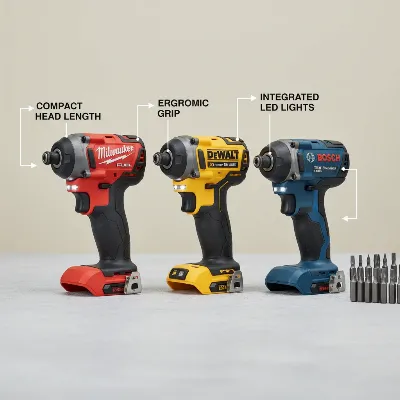 A clean, well-lit studio shot showing a selection of three popular 12V compact impact drivers (e.g., Milwaukee M12, DeWalt Xtreme 12V, Bosch 12V) laid out side-by-side on a workbench, highlighting their compact size and key design features. There are different types of bits next to them. Clear and detailed, with good lighting.
How to Use and Maintain Your 12V Compact Impact Driver Properly
To maximize the performance and longevity of your 12V compact impact driver, proper usage and maintenance are essential.
Safety First: Essential Guidelines
- Wear Safety Gear: Always use safety glasses to protect against flying debris. Gloves can improve grip and reduce vibrations.
- Secure Your Workpiece: Ensure the material you are working on is stable and clamped if necessary.
- Choose the Right Bit: Use only impact-rated hex bits designed for impact drivers. Standard screwdriver bits can break under the high torque.
- Maintain a Firm Grip: While impact drivers reduce wrist strain, maintaining a firm, controlled grip is still important.
- Be Mindful of Kickback: Though less prone than drills, high torque can still cause the tool to twist if the bit binds.
Mastering Bit Changes and Speed Control
- Quick Bit Changes: Most impact drivers feature a ¼-inch hex chuck that allows for quick, one-handed bit insertion. Simply push the bit in until it locks. To remove, pull the collar forward and the bit will release.
- Variable Speed Control: The trigger on most impact drivers is variable speed; a lighter squeeze results in slower rotation, while a full squeeze delivers maximum speed and impact. Use slower speeds for starting fasteners to ensure proper engagement and prevent cam-out.
- Adjusting Torque/Speed Modes: Many models offer multiple electronic speed settings (modes) that pre-set the maximum RPM and IPM. Use lower settings for delicate work or small fasteners and higher settings for larger, tougher applications.
Longevity Tips: Cleaning and Storage
- Regular Cleaning: After each use, wipe down the tool with a dry cloth to remove dust, dirt, and debris. Pay attention to the ventilation slots to prevent buildup that could hinder cooling.
- Inspect Bits and Chuck: Periodically check your bits for wear and tear, and ensure the chuck mechanism is clean and free of obstructions.
- Battery Care: Store batteries in a cool, dry place. Avoid extreme temperatures. Do not fully discharge lithium-ion batteries; recharge them before they are completely depleted.
- Proper Storage: Store your impact driver in its case or a designated tool bag, protecting it from impacts and moisture.
Where to Buy Your 12V Compact Impact Driver
Finding the right 12V compact impact driver is easier than ever, with numerous options available both in physical stores and online.
Reputable Retailers and Online Stores
- Major Home Improvement Stores: Retailers like Lowe’s, The Home Depot, and Ace Hardware typically carry a wide selection of 12V impact drivers from popular brands such as Milwaukee, DeWalt, Bosch, and Ryobi. This allows you to physically handle the tools, assess their ergonomics, and compare models side-by-side.
- Specialty Tool Stores: Independent power tool dealers often have knowledgeable staff who can provide expert advice and may carry a broader range of professional-grade brands, including Hikoki.
- Online Marketplaces: Amazon, eBay, and the official websites of manufacturers (e.g., Milwaukee Tool, DeWalt, Bosch) offer competitive pricing, a vast selection, and user reviews. Be sure to check seller ratings and return policies.
Tips for Smart Shopping
- Look for Kits: Many 12V impact drivers are sold as kits, which often include one or two batteries, a charger, and a carrying case. These kits generally offer better value than buying the tool body, batteries, and charger separately.
- Consider Tool-Only Options: If you already own compatible 12V batteries and a charger from a particular brand, buying the “tool-only” version can save you money.
- Read Reviews: Always read user reviews and expert comparisons to get real-world insights into a tool’s performance, durability, and any potential drawbacks.
- Check Warranties: Familiarize yourself with the manufacturer’s warranty policy, as it can be an indicator of product quality and provide peace of mind.
Buying Guide: Expert Advice from ReviewedJobs.com
As Admin of ReviewedJobs.com with over a decade of hands-on experience with impact drivers, my goal is to guide you to the optimal choice for your needs. The world of 12V compact impact drivers has evolved dramatically, offering impressive power in incredibly small packages.
Assess Your Needs and Project Types
Before making a purchase, take a moment to reflect on your typical projects. Are you primarily working on furniture assembly, small electronics, or light automotive tasks? Do you frequently find yourself in crawlspaces, under sinks, or inside machinery? If your work consistently involves these types of confined or overhead scenarios, then a 12V compact impact driver is not just a convenience, but a necessity. Don’t compromise on compactness if tight spaces are your norm.
Prioritize Ergonomics and System Compatibility
The comfort and balance of the tool in your hand cannot be overstated, especially when working in awkward positions for extended periods. A lightweight, well-balanced tool with a comfortable grip will significantly reduce fatigue and increase your precision. If you’re already invested in a 12V battery platform, sticking with that brand will allow you to interchange batteries and chargers, streamlining your toolkit and saving costs.
Don’t Overlook Reviews and Warranties
While specifications are important, real-world user reviews offer invaluable insights into a tool’s performance and durability. Look for consistent feedback regarding power, battery life, and overall reliability. A strong manufacturer’s warranty is also a testament to their confidence in the product’s quality, offering you protection against potential defects.
> “In the realm of impact drivers, the 12V compact models are not just ‘less powerful’ versions; they are purpose-built marvels of engineering designed for precision and access where larger tools simply fail. They’re a testament to how specialized tools can dramatically improve efficiency and user comfort.” – Admin, ReviewedJobs.com
Conclusion
The evolution of 12V compact impact drivers has revolutionized how we approach fastening tasks in tight and challenging environments. These agile powerhouses offer an unmatched combination of portability, ergonomic comfort, and sufficient power for a vast array of projects, making them indispensable tools for anyone facing space constraints. By understanding the key features—such as torque, head length, brushless motors, and battery systems—and considering your specific needs, you can confidently select a 12V compact impact driver that not only fits your hand but also fits into the tightest corners of your workday. Investing in the right compact tool is investing in efficiency, precision, and comfort, transforming once-dreaded tasks into straightforward accomplishments.
What challenging project will your new 12V compact impact driver help you conquer?
Frequently Asked Questions
Are 12V impact drivers powerful enough for professional use?
Absolutely. Modern 12V impact drivers, especially those with brushless motors, offer substantial torque (often exceeding 1,500 in-lbs) that is more than adequate for most professional light-to-medium duty fastening tasks, particularly in confined spaces or for applications where precision and maneuverability are key. Many professionals use them as a primary tool or as a highly effective supplement to their 18V systems.
What’s the difference between an impact driver and an impact wrench?
While both use rotational and percussive force, an impact driver is designed primarily for driving screws and smaller bolts, typically using ¼-inch hex bits. An impact wrench, on the other hand, is built for heavier-duty applications like loosening and tightening larger nuts and bolts, often found in automotive or construction work, and typically uses square drive sockets. Impact wrenches are generally larger and more powerful.
How long does a 12V impact driver battery last?
The runtime of a 12V impact driver battery depends on its Amp-hour (Ah) rating and the intensity of the task. A 2.0Ah battery might provide several hours of intermittent use or around 30-60 minutes of continuous, heavy fastening. Many users opt for kits that include two batteries, allowing one to charge while the other is in use, ensuring continuous operation.
Can I use drill bits with an impact driver?
No, impact drivers are designed for hex-shank driver bits specifically rated for impact use. Standard round-shank drill bits are not compatible with the ¼-inch hex chuck of an impact driver and should not be forced. Using non-impact-rated bits can lead to the bit breaking or being damaged due to the tool’s high torque and percussive action.
